Showing posts with label Exercise. Show all posts

Sunday, December 14, 2014

How to Beat the Holiday Blues

http://img2-2.timeinc.net/toh/i/g/10/holidays/xmas/12-diy-disasters/04-homeowner-mishaps.jpg

Thanksgiving is the first of the triple threat (Christmas and New Year's complete the trifecta) that can make you sing the holiday blues... If you are like me making "happy happy" during this time can actually be a real downer. If there are family conflicts (who doesn't?) the obligatory joy and gladness can seem like one big fat cruel joke. In addition, if you are struggling with relationships, work, money or going through a significant life-changing event (breakup, divorce, death of a loved one) you feel you want to skip the festivities. However, non-participation may not be an option. And for others the possibility of spending any of these holiday without family and friends can them into a dark and lonely place.

Here are some tips for avoiding emotional fallout this holiday season. 

1. Recognize physical symptoms of depression and anxiety. Emotional distress begins in the body. If you feel exhausted and tired look inward to see if it's psychological or physical. Anxiety can manifest as stomach upset, insomnia, irritability or jumpiness. Again, take an inventory. Identifying and understanding physical symptoms is the first step in addressing them. Whether the source is emotional or physical, you can do something about them.

2. Ask yourself what the symptoms mean. If they are physical, slow down, rest, change your diet etc... If they are psychological in origin ask yourself what are these feelings and what do they mean? Are you trying to suppress or ignore feelings of guilt, obligation, resentment and anger, or any other negative emotion?

3. Be kind to yourself and others. If you don't feel well and cranky maybe going to a holiday party isn't the best idea as it may make you feel worse. Sitting out a party or a gathering can be the kinder thing for yourself and for others; you are sparing negative energy from people you love and like. Listen to your inner voice even if it's saying something out of the ordinary.

4. Talk it out with your therapist, friends and family (not at the party or the dinner). Engage, reach out and share your feelings. If other people aren't available, talk to yourself by writing it out in a journal.

5. Go easy with food and drink. Alcohol will certainly amplify whatever you are feeling and overindulging will actually worsen symptoms of anxiety and depression and decrease the quality of sleep. As for food, gaining extra weight is much easier and more fun than losing it, so practice moderation.

6. Get your sleep and exercise. Enough said.

7. Be proactive. If you know you are going to be alone research and plan ahead activities. Do you have books, movies and activities to keep you occupied? Reach out to others who may be also be in the same boat.

8. Lower your expectations, or at least make realistic your expectations of the holiday season. Norman Rockwell's version of American holiday experience is aspirational at best. 

9. Create your own rituals even if it's just for this year. Maybe Santa Claus will no longer be welcomed in your home. Rather than receiving maybe Christmas is just about giving nonmaterial things. Go ahead and create your own activities based on YOUR values.

10. Be mindful. Holidays come around once a year and for some it is a season of fun and celebration. Acknowledge their right as your own. Also, be mindful that, thank god, they come around just once a year and this too shall pass. 

Friday, November 21, 2014

16 Danger Signs of Relapse

Flickr Commons

This list is from an excellent Facebook post. Even though the list seems it's from AA (Alcoholics Anonymous) for AA members, I think we can all benefit from this list even if we are not struggling with a severe addiction. I feel addicted can also mean we compulsively repeat certain patterns of behavior based on a set of beliefs, which can hold us back from growth.

For those of you who say you are "allergic" to the AA model,  go ahead and read the list and replace AA, sponsor, meetings with family, friend, get together, etc...

Relapse can mean returning to an old behavior which you attempted to change or correct. Or it can mean actual addiction to alcohol and drugs.

Basically, be present and be mindful of what's going on in yourself.

DANGER SIGNS OF RELAPSE

1. Exhaustion — Allowing oneself to become overly tired; usually associated with work addiction as an excuse for not facing personal frustrations.

2. Dishonesty — Begins with pattern of little lies; escalated to self-delusion and making excuses for not doing what's called for.

3. Impatience — I want what I want NOW. Others aren't doing what I think they should or living the way I know is right. Instant gratification is a monster that needs to be tamed.

4. Argumentativeness — No point is too small or insignificant not to be debated to the point of anger and submission.

5. Depression  — All unreasonable, unaccountable despair should be exposed and discussed, not repressed: what is the "exact nature" of those feelings?

6. Frustration  — Controlled anger/resentment when things don't go according to our plans. Lack of acceptance. See #3. Being a baby.

7. Self-pity — Feeling victimized, put-upon, used, unappreciated, disrespected: convinced we are being singled out for bad luck.

8. Cockiness — Got it made. Know all there is to know. Can go anywhere, including frequent visits just to hang-out at bars, boozy parties or an other potentially complicated setting where the addiction monster may get tempted.

9. Complacency - Like #8, no longer sees value of daily program, meetings, contact with other(s) alcoholics, (especially sponsor!), feels healthy, on top of the world, things are going well. Heck may even be cured!

10. Expecting too much of others — Why can't they read my mind? I've changed, what's holding them up? If they just do what I know is best for them? Leads to feeling misunderstood, unappreciated. See #6.

11. Letting up on disciplines — Allowing established habits of recovery - meditations, prayer, spiritual reading, emotional support system or AA contact, daily inventory, meetings or getting together with a pal — to slip out of our routines; allowing recovery to get boring and no longer stimulating for growth. Why bother?!

12. Using mood-altering chemicals — May have a valid medical reason, but misused to help avoid the real problems of impending alcoholic, drug or a behavioral addiction relapse.

13. Wanting too much — Setting unrealistic goals: not providing for short-term successes; placing too much value on material success, not enough on value of spiritual growth.

14. Forgetting gratitude — Because of several listed above, may lose sight of the abundant blessings in our everyday lives: too focused on # 13.

15. "It can't happen to me." — Feeling immune; forgetting what we know about the disease of addiction, including alcoholism and its progressive nature.

16. Omnipotence — A combination of several attitudes listed above; leads to ignoring danger signs, disregarding warnings and advice from fellow members or emotional support network.

Sunday, March 23, 2014

Running as Therapy

One of the first things I explore with my new clients is how they spend their day. The intended goal is to see what sort of structure or routine their days rest on.

Difficult and inevitable life changes (break-ups, unemployment, loss) activate situational or reactive depression or grief. It could be pass as sadness or become a full-on depressive episode. See Andrew Solomon's talk on depression.

For clients struggling with substance abuse instituting a new routine can help manage habitual mindless patterns of behaviors or rituals (after work drinks, weekend brunch drinks) that led to out-of-control use and consequent abuse and dependence.

I stress the importance of structure to one's day, and I stress exercise, journaling, and some sort of a mindfulness practice (yoga included).

Regular physical exercise should be a part of every one's life. Physical exercise a win/win proposition, just as smoking is a lose/lose.


https://www.flickr.com/photos/sinkat0864/

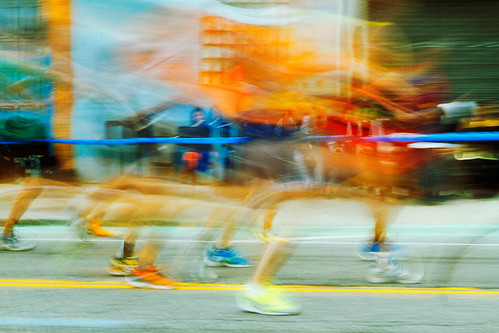
This post is about running, and it is my primary form of exercise. Like so many things in life, it has its own set of challenges and pleasures: It's time consuming and commitment; you sweat more and that means breakouts; it hurts; it's hard to run when it's cold, windy, hot, rainy, or when you don't feel like it; and laundry that require immediate attention.

However, after a few miles when you get your bearings (doesn't happen all the time), your breathing and legs sync up, and you realize you are mere physical matter cutting through space. You get in that headspace one strives for in meditation. Your thoughts recede behind a veil that alternate between euphoria and pain. You are just your body. For this reason, running is referred as meditation in motion.

After running a substantial distance, after the chocolate milk and mandatory stretching and shower, you feel clear headed, calm, energized. Your sleep improves, you easily fall into a deep, satisfying sleep. In addition, as your body grows stronger, leaner and gains stamina, so does your sense of confidence in knowing that you can endure temporary pain and meet goals which at one point in time unimaginable.

Just don't take my word for it. The Times runs many pieces on benefits of running (and many tedious pieces about it too). And there was this: a personal essay on long distance running and how it helped the writer deal with life's harshest emotional challenges. 

And she mentions Haruki Murakami's book What I Talk About When I Talk About Running, which helped me transition from a fitness runner to a more "serious" runner.

I will end this rather long-winded blog with my favorite quote from the book (as does the author of the Times piece):

“Pain is inevitable. Suffering is optional.” ― Haruki Murakami, What I Talk About When I Talk About Running