Showing posts with label Anxiety. Show all posts

Tuesday, December 1, 2015

Collecting Thoughts After The Paris Attacks


http://www.trbimg.com/img-5647a42b/turbine/la-fg-paris-attacks-20151113

November 13th attack on Paris rattled, horrified and scared me. For people living in large cities like New York, part of the horror was the visceral feeling that it too could happen here, that it could happen to me. It made us fear for our own safety: safety in terms of “our world”, “our nation,” “our city," and ultimately “my life.” This is terrorism defined; the aim of the terrorists is to hold us hostage so that we constantly fear, question our safety, and ask ourselves “what if?” Anxiety, dread and distrust are their invisible weaponry. They work to unravel the fabric of our society: we begin seeing “the other” in each other, whether they are different from us in country of origin, ethnicity, religion, subtle differences in our political positions. We are meant to come undone; the collective sense of us is attacked from within. 

Immediately after the attack countless disagreements, confrontations, and “un-friending” occurred on Facebook, one reflective surface of our society. When confronted with personal and collective helplessness we project aggression and fear in the form of righteousness, outrage and certainty onto others. We use social media as an outlet to deal with our unprocessed anxieties and shout at each other that there is a correct way to feel, respond and display our discomfort. 

In the real world, however, we have to manage our feelings privately. Perhaps there are quieter, more useful ways to consider living with uncertainty of global terrorism.

Accept and acknowledge your fear and anxiety.

Fear for personal safety and safety for loved ones is real; again, this is, sadly, the logic of terrorism. Looking closer at fear there is helplessness; the recognition that we cannot control our immediate environment, that danger lurks everywhere. Acknowledge that this is an universal experience for the human animal when faced with uncertainty of physical harm. Acknowledging these uncomfortable feelings to ourselves is necessary so that we can contain it and prevent it from running amok. 


Share your feelings with others.

In times of collective fear, talking about your anxieties with friends, family and neighbors will help contextualize the experience. Recognizing that that anxiety and fear is a universal, shared reaction helps us contain the fear individually and strengthen personal connections at the same time. Another positive part of talking about it is that maybe you and your friends and family will come up with a plan in the event something like this happens in your city. Sharing can also look like a joining a march or a demonstration, connecting with a larger community of people going through similar reactions.

Empathize. 

This is an obvious one but recognize that families and friends of the attack victims are grieving and mourning (this is especially painful because majority of the victims were so young). The injured, the bystanders and witnesses, and all of Paris and France, will undoubtedly struggle with Post Traumatic Stress Syndrome and other forms of intense fear and anxiety. Parisians and French citizens who are Muslim will face additional hardship of being associated with the attackers because of their “shared” religion; they will be confronted with suspicion, racism, and anger, all byproducts of fear. 

Empathize. 

When dealing with others’ seemingly unreasonable reactions that are different from yours rather than being reactive — acting on your gut feelings and thinking how can they be so “stupid,” “racist,” or “ignorant” try reframing their reaction from various personal limitations they could be dealing with. For someone who already feels helpless, an event like this delivers a double punch: their existing vulnerabilities could be triggered on top of the collective vulnerability.  

Get informed. 

I know there is another school of thought which says we should limit our exposure to news and world events that can de-center us. We are to focus our attention solely on our particular experiences and not get “wound up” in negativity that can make us feel helpless or hopeless. But there is a different way. Being firmly grounded in our personal lives and values anchors us and allows us to be lead by curiosity. Staying current with world events enriches us with a more nuanced view of the world and help us feel that we are part of history. And we will inevitably learn that we are all connected, not just in the “spiritual” sense but in more concrete ways, helping us become more empathic with one another.

Reflect on the nature of LIFE: life is framed by birth and death.

The tragedy of Paris show us how quickly a life can be extinguished. Reflecting on the inevitability of death is a Buddhist way to help us to not get attached to fear. By framing fear around the certainty of death, it helps us re-contextualize our troubling reactions to uncertainty of living in the age of global terror. It can also leads us to a deeper appreciation of life, the knowledge that being present, or being mindful, with ourselves, our loved ones, and the world is in essence all we have; it is what we call life.

Thursday, November 5, 2015

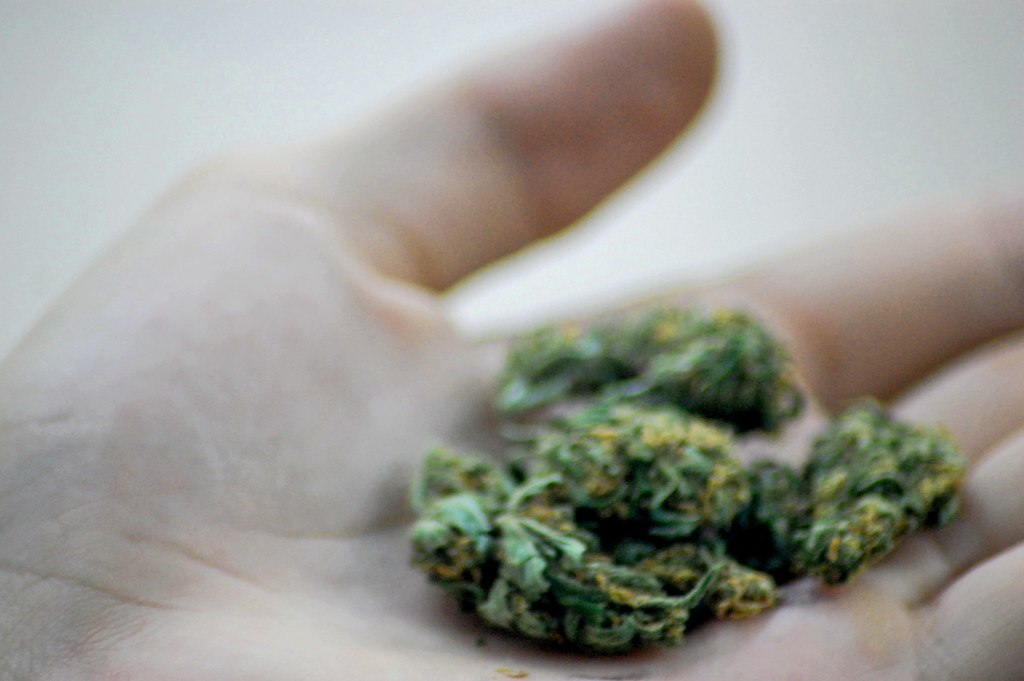
Let's Review Marijuana

https://c1.staticflickr.com/5/4056/4420604477_2d02aa0c30_b.jpg
Nearly every day another state or country makes the news as it considers legalizing marijuana. Here in New York City you can smell it just about everywhere around the clock in the most unexpected places. It's so common, so easy to find, many do not consider it a "drug." Consensus is that it's not bad for you.

Furthermore, there are scientific and medical studies that say marijuana, even when used regularly, is essentially harmless without long-term consequences. Celebrities readily share, endorsepromote and celebrate marijuana. 

But is it really a problem? 

Clients say they enjoy smoking marijuana in the following ways: 
  • Lowered anxiety, a feeling of calm and peace
  • Makes their troubles and worries go away temporarily
  • Helps them sleep
  • It enlivens the senses: movies are funnier, music sounds better, sex feels more intense, food tastes more delicious
  • Life feels less dull 
  • They become more imaginative, more creative
  • Helps them connect to a higher level of consciousness
  • One young client even told me that it cures cancer; it doesn't 

However, regular smokers of marijuana also admit there are problems. Biggest complaint is that it lowers their cognitive/mental functioning; they can't think clearly immediately after and even hours and days after smoking. 

These are common problems clients experience with regular use: 
  • Memory problems, mostly short-term
  • Low mood: feeling irritable, anxious, more on edge
  • Tiredness, feeling groggy and cloudy 
  • Decreased motivation and increased procrastination
  • Feelings of numbness, less inclined to feel happy
  • Coughing and chest congestion

These are what we professionals call withdrawal symptoms. 

And there are more serious problems linked to marijuana. I've met people for whom it triggered a psychotic breakdown even after trying it just once. It's a rare occurrence, but it does happen.

For others, they say marijuana makes them anxious, paranoid, and self-conscious. So they stay away from it. 

In my experience, I've learned that for people who already struggle with anxiety and depression regular marijuana use produces unwanted, unpleasant feelings, as it exacerbates pre-existing sensitivities. 

Clients seek help to cut back or even stop using marijuana because they can’t do it on their own. They recognize that negative effects outweigh the positive and want to feel and function better.

Obviously a discussion on abuse, dependence and addiction needs to happen, and I will continue to explore this subject.

If you feel you have a problem with marijuana, first step is to to ask yourself what you are getting from it and what it’s taking away, in other words, look at the pros and cons. 

Wednesday, October 28, 2015

Drinking in America

http://cdn.muslimvillage.com/wp-content/uploads/2010/11/Alcohol-effects-on-society-are-greatly-underestimated.jpg
When a client comes to me because they are drinking too much, the first thing we do is we evaluate how much and how often they drink. Part of this exploration is to educate the client on health effects of alcohol and to understand the difference between healthy drinking and high-risk or problem drinking. And after the initial screening/evaluation, we then go on to look at other parts of their lives, to see what is contributing to excessive drinking and what the consequences are. This isn't an easy process, but a necessary one.

Often, clients are shocked when they learn that their drinking habit falls into the "problem or high-risk drinking" and, that they often binge drink. What may seem like a typical night out turns out to be a binge drinking session! (For women, binge drinking is drinking 5 or more units of alcohol in one session, and for men it's 7 or more.) For most people, I think, binge drinking is associated with college drinking. But this is not so.

Unfortunately, most Americans don't know what problem drinking looks like and dismiss their own heavy drinking until something bad happens. The fact is chronic heavy drinking shortens life and lowers the quality of life.

Here are some facts culled from recent findings about drinking in America.


The bottom line is that alcohol causes far greater harm than drugs. By CDC's estimation, between 2006-2010, 88,000 people died annually from complications from alcohol, while 38,329 died from drug overdoses in 2010.

Individually, persistent or chronic problem drinking is associated with depression and anxiety, decline in social and professional functioning (missing work or school, decreased productivity, social isolation, frequent arguing and fighting). Nationally this becomes a $249 billion problem each year in lost productivity and costs to cover treatment and crimes resulting from alcohol. Ultimately we all have to pay.

Monday, May 4, 2015

Child Adverse Experices (ACE) and Adult Health

Federal law defines child abuse as the following:
  • "Any recent act or failure to act on the part of a parent or caretaker which results in death, serious physical or emotional harm, sexual abuse or exploitation"; or
  • "An act or failure to act which presents an imminent risk of serious harm."
Number of reported cases of child abuse is about 3 million annually. Every ten seconds another case of child abuse is reported to child protective services. 

I can't help wonder the actual number of children affected by child abuse and neglect. In my private practice and my work at a community mental health clinic, vast majority of clients experienced some form of abuse and neglect as children, but most of these cases did not get reported.

So, why do my clients come to therapy? Main complaints are: depression, anxiety, problems with drug and alcohol, addiction to food or sex, relational problems, sleep issues, low self confidence, general dissatisfaction in life. 

The relationship between childhood trauma and its effect on adult physical and mental health has been measured and documented in a study with over 17,000 people: ACE Study (Adverse Child Experiences). You can measure your score here

I will definitely revisit this subject in future posts.

Sunday, December 14, 2014

How to Beat the Holiday Blues

http://img2-2.timeinc.net/toh/i/g/10/holidays/xmas/12-diy-disasters/04-homeowner-mishaps.jpg

Thanksgiving is the first of the triple threat (Christmas and New Year's complete the trifecta) that can make you sing the holiday blues... If you are like me making "happy happy" during this time can actually be a real downer. If there are family conflicts (who doesn't?) the obligatory joy and gladness can seem like one big fat cruel joke. In addition, if you are struggling with relationships, work, money or going through a significant life-changing event (breakup, divorce, death of a loved one) you feel you want to skip the festivities. However, non-participation may not be an option. And for others the possibility of spending any of these holiday without family and friends can them into a dark and lonely place.

Here are some tips for avoiding emotional fallout this holiday season. 

1. Recognize physical symptoms of depression and anxiety. Emotional distress begins in the body. If you feel exhausted and tired look inward to see if it's psychological or physical. Anxiety can manifest as stomach upset, insomnia, irritability or jumpiness. Again, take an inventory. Identifying and understanding physical symptoms is the first step in addressing them. Whether the source is emotional or physical, you can do something about them.

2. Ask yourself what the symptoms mean. If they are physical, slow down, rest, change your diet etc... If they are psychological in origin ask yourself what are these feelings and what do they mean? Are you trying to suppress or ignore feelings of guilt, obligation, resentment and anger, or any other negative emotion?

3. Be kind to yourself and others. If you don't feel well and cranky maybe going to a holiday party isn't the best idea as it may make you feel worse. Sitting out a party or a gathering can be the kinder thing for yourself and for others; you are sparing negative energy from people you love and like. Listen to your inner voice even if it's saying something out of the ordinary.

4. Talk it out with your therapist, friends and family (not at the party or the dinner). Engage, reach out and share your feelings. If other people aren't available, talk to yourself by writing it out in a journal.

5. Go easy with food and drink. Alcohol will certainly amplify whatever you are feeling and overindulging will actually worsen symptoms of anxiety and depression and decrease the quality of sleep. As for food, gaining extra weight is much easier and more fun than losing it, so practice moderation.

6. Get your sleep and exercise. Enough said.

7. Be proactive. If you know you are going to be alone research and plan ahead activities. Do you have books, movies and activities to keep you occupied? Reach out to others who may be also be in the same boat.

8. Lower your expectations, or at least make realistic your expectations of the holiday season. Norman Rockwell's version of American holiday experience is aspirational at best. 

9. Create your own rituals even if it's just for this year. Maybe Santa Claus will no longer be welcomed in your home. Rather than receiving maybe Christmas is just about giving nonmaterial things. Go ahead and create your own activities based on YOUR values.

10. Be mindful. Holidays come around once a year and for some it is a season of fun and celebration. Acknowledge their right as your own. Also, be mindful that, thank god, they come around just once a year and this too shall pass. 

Tuesday, July 29, 2014

Anxiety in Choosing

Whether you are looking to purchase your first home, choosing an outfit for that first date or job interview, or deciding to marry or move-in together with your boyfriend or girlfriend, making decisions can be a harrowing process.

If the decision involves a lot of money it will raise all sorts of associated worries. Do I have enough money? Will I have to cut back on something else to cover the investment? If something goes wrong what will happen to my future? Will I become homeless or need to work two jobs?

If you need to decide the fate of a romantic relationship, anxieties in the form of ambivalence may rise. You can love and feel affection for someone while secretly harboring concerns about them: Will they become financially and emotionally dependent on me? Will their quirks become full-blown craziness down the road? What sort of parents are they going to become? Will they become their parents?

Ambivalence is the experience of feeling two opposing emotions simultaneously. The ambivalent partner may feel weighed down by guilt and confusion: If I really loved this person I shouldn't be feeling this way... so the thought goes. But is there anything in life that is wholly black and white?

The fact is we are constantly choosing. We make decisions each and every moment. We don't notice because for the most part these decisions are miniscule and inconsequential: a poorly thought-out outfit probably isn't going to affect your future too much. Also, when we make the same decision repeatedly (mindlessly, without thinking) we forget we are choosing.

One aspect of being a mature human being is that inevitably we have to make a big decision that will affect the rest of our lives. The option to not choose is really not an option (remember Bartleby the Scrivener?).  The other option is to live off the grid and live independently, freed from social conventions and modern amenities.

Here is a very good piece of marketing — profound and entertaining at the same time!


More on decisions and decision-making process later.

P.S. I condone moderate drinking, as does Jim Beam and Willem Dafoe, I am sure.


Monday, April 21, 2014

Importance of Sleep

http://www.animal-ethics.org/sentience-section/

Whenever I see a new client, I always review their sleep pattern. Quality and length of sleep is indicative of general mental health. Inability to have a good night's rest indicates anxiety, which tends to be a close companion of depression. Depression can make one sleep too much or too little; and it can make one eat too little or too much. (Here is a very moving talk on depression.)

Below is a small set of questions I ask my clients at the start of therapy and periodically thereafter to monitor their overall mental health.
  • Are you able to fall asleep within a reasonable amount of time?
  • Are you able sleep through the night or do you wake up in the middle of the night and find yourself unable to fall back to sleep?
  • Do you require alcohol or other depressants like marijuana to become "sleepy"?
  • Do you wake up early morning but not able fall back asleep right away, only to fall asleep after a period and then wake up later than planned?
  • Do disturbing dreams or nightmares regularly wake you up?
  • Do you regularly get less than 6 hours of sleep a night?
  • Do you "catch up" on the weekends?
  • Do you experience sleep apnea?
Most adults require at minimum 6 hours and at optimum 8 hours of sleep a night. Younger adults require more sleep than older people. It's a myth that you can catch up on sleep. What's actually happening is that your body is resting for a longer period than normal, but sleep itself cannot be made up.

Here are some suggestions to help you re-regulate your sleep to a more healthier routine to help you feel recharged.
  • Make the room as dark as possible. An eye mask can do the trick, as well as ear plugs.
  • A cooler room is better for sleeping. We all know how it's hard it is to sleep in the middle of a heat wave.
  • Remove or cover your clock, or smartphone. Being conscious of time can worsen insomnia. Being a clock watcher during the night can increase anxiety. Even a small amount of light from an alarm clock can affect the production of melatonin, an enzyme released by the pineal gland in the brain that regulates your circadian rhythm, or your natural sleep cycle.
  • Keep the bedroom for sleeping, or for sex: Don’t work, use your computer or watch TV in bed, at least not right before going to sleep. (Personally, reading in bed during an off day is one of the greatest luxuries.)
  • Stay away from all electronic devices before sleep. We all know why. 
  • Stick to a routine: Human bodies work better on a schedule, so try and unwind an hour or two before bed and go to sleep at around the same time each night. We get our best sleep between 10 p.m. and 1 a.m., so don’t stay up late.
  • Have a spoonful of honey before bedtime. 
  • From Tim Ferris: Eat a small snack of celery with almond or peanut butter. He will give you scientific reasons why it works, along with other super high-tech, downright odd hints about getting optimum sleep.
  • Take a hot bath or shower. (Tim Ferris suggests a cold bath before bed.) Lavender oil in the water and on your temples will help you relax.
  • Journaling before sleep will help you clear your mind and set the agenda for the next day. My suggestions to clients: What 3 things went right today? Or, you can write in a gratitude journal. 
  • Make a list for the morning, important things that need your attention right away. If you are anxious about something you have to wake up for, make a check off list and check off everything on that list, so your mind can shut off.
Before reaching for Tylenol PM, or asking your doctor for Ambien or another prescription sleeping pill, try chamomile tea with honey, valerian tea with lots of honey (valerian stinks but is a mild sedative), or melatonin (essential for business travelers). Melatonin is available at drug stores and is a nutritional supplement.

One of the greatest sleep aid is strenuous exercise like running. In addition to promoting good sleep, great skin turns out to be another benefit from running.

Thursday, January 16, 2014

Living in an Age of Anxiety

Each of us has an intimate knowledge of anxiety in its many forms and subtle qualities. 
  • Apprehension
  • Fear
  • Distress
  • Uneasiness
  • Disquiet
  • Agitation
  • Upset
  • Worry
  • Torment
  • Fretting
  • Angst
  • Foreboding
  • Misgiving
  • Tension
  • Stress
  • Nervousness
  • Dread
The list is by no means comprehensive. We can certainly add other words to describe our particular experience of what it's like to be anxious.

Not surprisingly, it’s now the most commonly diagnosed mental disorder. As a result, it’s been talked about and written about everywhere. New York Times ran an opinion section called Anxiety, which published 70 pieces that ended last summer. 

Wednesday, August 7, 2013

Who Are These Alcoholics?

Google “alcoholic pictures” and you will find that an alcoholic tends to be an unhappy adult white male who sits in the dark with his head in his hands. He is alone and depressed with only a bottle for company.


An alcoholic, defined clinically, is someone physically dependent on (addicted to) alcohol and unable to control how much they drink; alcoholic also has cravings and increased tolerance, and goes through withdrawal symptoms when alcohol leaves their system. Comparatively, a problem drinker, or an alcohol abuser, is someone psychologically dependent on alcohol but without the physical dependence (although a hang over is a collection of moderate withdrawal symptoms). For the problem drinker, the issue isn’t alcohol (because they can go without) but the reasons why they drink and what happens after they drink.

National Institute of Health and National Institute of Alcohol and Alcohol Abuse classified U.S. alcoholics into five subtypes. These results are from a 2007 national survey, and it is estimated 14 million Americans qualify as alcoholics.

Young Adult subtype: largest group in the U.S. with 31.5 percent of alcoholics. Low rate of mental illness, drug abuse and history alcoholism in their families. Least likely to seek out help.

Young Antisocial subtype: In their mind-twenties, 21 percent of U.S. alcoholics. Early onset of alcohol use and problems related to alcohol abuse. More than half from families with alcoholics. About half are diagnosed with Antisocial Personality Disorder. Many suffer from the trinity of mental illness (depression, bipolar disorder and anxiety problems). More than 75 percent smoke cigarettes and marijuana, and many have problems with cocaine and opiates. More than a third seek help.

Functional subtype: 19.5 percent of alcoholics. They are mostly middle-aged, well-educated, with stable jobs and families. Third have alcoholism in their family histories, a quarter had major depression at some point in their lives, and nearly half were smokers of tobacco.

Intermediate Familial subtype: 19 percent of American alcoholics, they are middle-aged and half withs familial history of alcoholism. Most smoked, half of them had clinical depression, and 20% have had bipolar disorder. Nearly 20% had problems with cocaine and marijuana. In this group only a quarter get treated.

Chronic subtype: 9 percent of U.S. alcoholics. Middle-aged; began drinking heavily at an early age. High rates of Antisocial Personality Disorder and criminality. Highest rate of mental illness (depression, bipolar disorder, anxiety disorder). High rates of smoking, marijuana, cocaine, and opioid dependence. 2/3 of the group get help (many of them to mandated to treatment making them the most prevalent type found in treatment.


Information, which I summarized here, comes from:

http://www.news-medical.net/news/2007/06/29/27074.aspx?page=2

http://www.alcoholic.org/research/alcoholism-statistics-and-information/


Are you an alcoholic? Find out here

In my practice I work to help problem drinkers with their emotional health, in addition to learning how to become a more mindful, moderate drinker.


Sunday, July 28, 2013

Minding the Mind: What Is Mindfulness

By now everyone has read and heard about this thing called mindfulness. If you believe the hype it can help you eat less, become nicer, smarter, more relaxed and less stressed. Sounds good, doesn’t it? So, what is it and what’s the catch?

It's difficult to write about it because how do you describe a state of consciousness without sounding hokey? But I hope that the following will pique your interest enough to look into it for yourself. 

First, let’s look at what it is. 
1. Mindfulness is a state of mind we aspire to. It is a meditative state through which we can experience passage of time fully awake and conscious. It is being aware of your senses as you go about life in the here and now. The intention is to center your attention through your physical self and less from your inner, thinking self. Brain is part of the body and so whatever feelings and thoughts that arise throughout the day, they can be experienced for what it is in the present. You can be mindful and enjoy food, feel close to your friends, have a deep a conversation and feel and emotionally connected — meaning, any activity can be experienced mindfully.

2. Regular practice of meditation will make it easier to connect to the mindful state. It’s like running, the more you run, easier running becomes. 

3. It’s paying attention to the “thing” which you are doing, whether you are engaged in deep, meditative breathing, walking your dog around the park, washing dishes, reading, listening to music, or having sex.

4. It’s noticing the chatter that fills your head. When you become more mindful, you will notice many thoughts, memories and feelings come to your awareness; mindfulness is not letting your attention fall on them and letting them take you into the past or the future. Think of it this way: You are walking down the street with a destination in mind, and you run into people you know. You say hello and greet them pleasantly, but do not stop and get into conversations, because you are headed somewhere else.

5. Mindfulness is understanding that the chatter — inner voices, negative self talk, flashbacks, cravings, obsessions — is the source of our anxiety and depression. I don’t mean to say anxiety and depression will cease to happen or that it shouldn’t happen, but that we can quiet the chatter which is responsible for unnecessary anxiety and depression.


And, what it isn’t:
1. Mindfulness isn’t being distracted. Everyone experiences the discomfort of doing something or being with someone without being fully present. Your inner self is elsewhere, thinking or feeling something not in the present. It feels as if you are holding two conversations or doing two things simultaneously, which is exhausting. Focusing on what you are doing will actually enrich your experience.

2. Ignoring physical states: if you are hungry, eat something; if you are tired, take a break or nap; if you are angry, talk or write about it; if you are lonely, reach out for a connection, whatever that may look like; if you are in pain, physical or emotional, do something to lessen or stop the pain. The idea is that we can’t tune in with the here now if these primary needs go unmet. It’s like trying to operate a car that has no gas or has a major mechanical problem. In order for you to function optimally, you need to take care of your self. 

3. Giving up because you can’t “get mindfulness right.” Perfection, or in this case being completely attuned to the present, is something we aspire to; it motivates and gives direction but perfect mindfulness is not possible. Go easy when you find yourself distracted, gently redirect your attention back to the here and now and the task before you.


Here is a link to a guided meditation which is a very good introduction to meditation, and it will actually help you relax!