Showing posts with label Alcohol. Show all posts

Wednesday, October 28, 2015

Drinking in America

http://cdn.muslimvillage.com/wp-content/uploads/2010/11/Alcohol-effects-on-society-are-greatly-underestimated.jpg
When a client comes to me because they are drinking too much, the first thing we do is we evaluate how much and how often they drink. Part of this exploration is to educate the client on health effects of alcohol and to understand the difference between healthy drinking and high-risk or problem drinking. And after the initial screening/evaluation, we then go on to look at other parts of their lives, to see what is contributing to excessive drinking and what the consequences are. This isn't an easy process, but a necessary one.

Often, clients are shocked when they learn that their drinking habit falls into the "problem or high-risk drinking" and, that they often binge drink. What may seem like a typical night out turns out to be a binge drinking session! (For women, binge drinking is drinking 5 or more units of alcohol in one session, and for men it's 7 or more.) For most people, I think, binge drinking is associated with college drinking. But this is not so.

Unfortunately, most Americans don't know what problem drinking looks like and dismiss their own heavy drinking until something bad happens. The fact is chronic heavy drinking shortens life and lowers the quality of life.

Here are some facts culled from recent findings about drinking in America.


The bottom line is that alcohol causes far greater harm than drugs. By CDC's estimation, between 2006-2010, 88,000 people died annually from complications from alcohol, while 38,329 died from drug overdoses in 2010.

Individually, persistent or chronic problem drinking is associated with depression and anxiety, decline in social and professional functioning (missing work or school, decreased productivity, social isolation, frequent arguing and fighting). Nationally this becomes a $249 billion problem each year in lost productivity and costs to cover treatment and crimes resulting from alcohol. Ultimately we all have to pay.

Friday, January 16, 2015

Dangers of Binge Drinking

Have you drunk more than 8 drinks in a single occasion this month? If you answer is yes you are not alone. On average 38 million American adults binge 8 or more drinks at a rate of 4 times a month.

I've written about binge drinking and its dangers before. One of the biggest misconception about binge drinking is that it's a problem primarily for young people — minors, college students and young professionals. What may surprise you is that the group of people who are at most risk from dangers of binge drinking (defined as drinking 5 or more drinks in one occasion) are middle aged adults.

According to the latest report from the CDC, 6 people on average die from alcohol poisoning each day. Surprisingly, 75% of them are adults between 35 to 64 years old. And majority of them (75%) are men.

Clients I see will NOT die from alcohol poisoning. The problem as I see it is that frequent binge drinking or heavy drinking normalizes drinking until it becomes habitual. It becomes the norm. Without so much awareness habitual drinking becomes the way to deal with unwanted feelings and positive feelings. Prolonged alcohol abuse weakens all the systems in the body and contribute to unnecessary health conditions, lower our quality of life and contribute to early death.

It's difficult to believe but alcohol-related deaths outnumber all drug overdose deaths each year.

In our culture we celebrate, socialize and cope with stress with alcohol. Inherently this isn't a bad thing. As long as we have inhabited this planet, we have invented concoctions to help us escape reality.

What is "bad" is when alcohol use or overuse becomes the "go to" to deal with stress, anxiety, loneliness and boredom.

If you find yourself drinking habitually ask yourself these questions.

• Am I drinking too much? (Everyone has that inner voice of reason, which is often more ignorable under the influence)
• Do my friends or social circle drink too much and act up in ways that raise red flags (DUI's fights, arrests, questionable sexual behavior?
• Do I wake up middle of the night and find myself unable to fall back asleep?
• Am I hungover in the morning and have a hard time getting going?
• Am I missing school or work because of my drinking?
• Have others (friends, family, partner, husband or wife) nagged me about my drinking?

Monday, January 12, 2015

Binge Drinking

Dictionary definition of binge:
a : a drunken revel
b : an unrestrained and often excessive indulgence
c : an act of excessive or compulsive consumption (as of food)
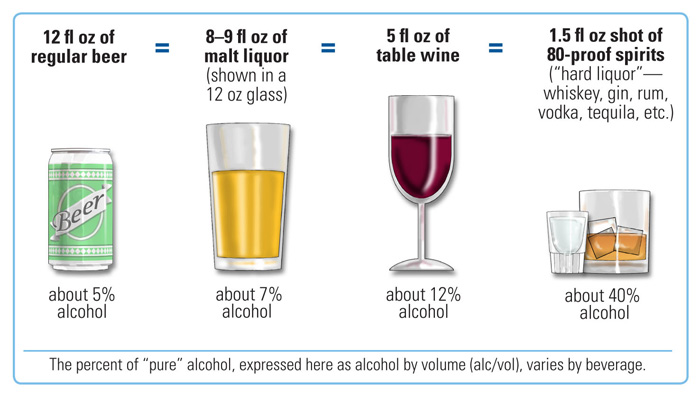
Binge drinking is defined as drinking five or more drinks in one sitting or session. If you want to get technical it's five for males and four for women. Women, due to size and biology just can't handle as much alcohol. Excessive or heavy drinking cutoff is more than 15 drinks per week for men and 8 for women. Just to get really nerdy, a drink is equivalent to a 12 ounce bottle or can of beer (this means a pint is a drink and a half), a shot of liquor and 5 ounces of wine (five units in a bottle).

Why is binging on alcohol so bad for you?
• You will feel bad the next day. Hello hangover!
• Increased likelihood of injury from falls, trips, bumping into things
• Under the influence (drunk) you are more likely to be disinhibited: doing things you normally wouldn't, like having unprotected sex, deciding to drive home, spending money excessively, etc.
• Alcohol poisoning which can permanently damage your brain, liver and other organs
• Getting into fights with friends, strangers, or your significant other
• Getting arrested, going to jail, etc.
• It may become habitual, which means you are at risk of becoming alcohol dependent and early death

According to the CDC, one in six adults binge drink about 8 drinks 4 times a month! 


Friday, November 21, 2014

16 Danger Signs of Relapse

Flickr Commons

This list is from an excellent Facebook post. Even though the list seems it's from AA (Alcoholics Anonymous) for AA members, I think we can all benefit from this list even if we are not struggling with a severe addiction. I feel addicted can also mean we compulsively repeat certain patterns of behavior based on a set of beliefs, which can hold us back from growth.

For those of you who say you are "allergic" to the AA model,  go ahead and read the list and replace AA, sponsor, meetings with family, friend, get together, etc...

Relapse can mean returning to an old behavior which you attempted to change or correct. Or it can mean actual addiction to alcohol and drugs.

Basically, be present and be mindful of what's going on in yourself.

DANGER SIGNS OF RELAPSE

1. Exhaustion — Allowing oneself to become overly tired; usually associated with work addiction as an excuse for not facing personal frustrations.

2. Dishonesty — Begins with pattern of little lies; escalated to self-delusion and making excuses for not doing what's called for.

3. Impatience — I want what I want NOW. Others aren't doing what I think they should or living the way I know is right. Instant gratification is a monster that needs to be tamed.

4. Argumentativeness — No point is too small or insignificant not to be debated to the point of anger and submission.

5. Depression  — All unreasonable, unaccountable despair should be exposed and discussed, not repressed: what is the "exact nature" of those feelings?

6. Frustration  — Controlled anger/resentment when things don't go according to our plans. Lack of acceptance. See #3. Being a baby.

7. Self-pity — Feeling victimized, put-upon, used, unappreciated, disrespected: convinced we are being singled out for bad luck.

8. Cockiness — Got it made. Know all there is to know. Can go anywhere, including frequent visits just to hang-out at bars, boozy parties or an other potentially complicated setting where the addiction monster may get tempted.

9. Complacency - Like #8, no longer sees value of daily program, meetings, contact with other(s) alcoholics, (especially sponsor!), feels healthy, on top of the world, things are going well. Heck may even be cured!

10. Expecting too much of others — Why can't they read my mind? I've changed, what's holding them up? If they just do what I know is best for them? Leads to feeling misunderstood, unappreciated. See #6.

11. Letting up on disciplines — Allowing established habits of recovery - meditations, prayer, spiritual reading, emotional support system or AA contact, daily inventory, meetings or getting together with a pal — to slip out of our routines; allowing recovery to get boring and no longer stimulating for growth. Why bother?!

12. Using mood-altering chemicals — May have a valid medical reason, but misused to help avoid the real problems of impending alcoholic, drug or a behavioral addiction relapse.

13. Wanting too much — Setting unrealistic goals: not providing for short-term successes; placing too much value on material success, not enough on value of spiritual growth.

14. Forgetting gratitude — Because of several listed above, may lose sight of the abundant blessings in our everyday lives: too focused on # 13.

15. "It can't happen to me." — Feeling immune; forgetting what we know about the disease of addiction, including alcoholism and its progressive nature.

16. Omnipotence — A combination of several attitudes listed above; leads to ignoring danger signs, disregarding warnings and advice from fellow members or emotional support network.

Friday, September 26, 2014

Economics of Drinking

Pareto Law is a little known principle applicable to multiple disciplines. It is better known as the 80-20 rule: 80% of the effects comes from 20% of causes, or 20% of workers in an organization perform 80% of the work. 

What does this have to do with alcohol consumption? Everything, of course. 20% of Americans consume 80% of alcohol sold in the U.S. 

Check out this graphic.

Shockingly, 10% of Americans (24 million people over the age of 18) drink over 50% of all alcohol consumed in America. That averages out to 10 drinks per day or nearly 74 drinks a week (2 bottles of wine a day, or 18 bottles of wine or three 24-cases of beer per week).

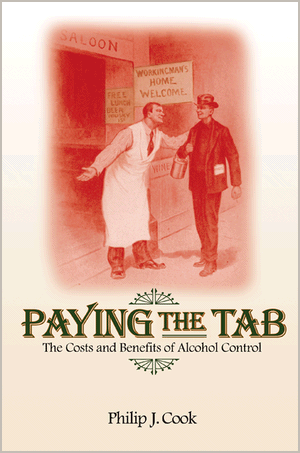
These statistics are from Paying the Tab: The Costs and Benefits of Alcohol Control by Philip Cook, a professor of Public Policy at Duke. And, I have not read the book yet.

Here are some more fascinating bits from the book which used data from a national survey that took place between 2001 and 2005: 
  • 30% of Americans don't drink at all. 
  • 30% of Americans drink at least one drink a day 
  • 20% drink at least two a day. (BTW, low-risk or moderate drinking falls somewhere between the two.) 
And according to the CDC excessive drinking costs us $223.5 billion in 2006, or about $1.90
per drink.


Definitely more to come on this fascinating topic...


Monday, September 22, 2014

All About Alcohol

Contrary to what we are led to believe, alcohol is the worst when it comes to harmful consequences. Globally it kills 2.5 million people and nationally 75,000 people die prematurely because of alcoholism and alcohol-related illnesses. It is the third leading killer globally.

An infographic from the team at Addiction Blog
Alcohol and the modern world (INFOGRAPHIC)

Here are some sobering facts about alcohol you may not have considered:

What is heavy drinking or risky drinking?
For men 14 or more units of alcohol per week.
For women, the number drops to 7.

What is a unit of alcohol?
.6 fluid ounce or 12 grams of pure alcohol, that is a 12 oz. bottle of beer, a shot of booze or a glass of wine (1/5th of a bottle).

Prolonged alcohol abuse or heavy drinking is linked to serious health risks:
  • alcoholic cardiomyopathy 
  • alcoholic liver disease 
  • decrease in bone density 
  • decrease in bone mass (leading to osteoporosis) 
  • heart arrythmias 
  • increased blood pressure 
  • increased risk of bone fracture 
  • loss of immune response 
  • stroke
But, just being drunk can be bad in the short term.
Lest we forget: alcohol costs money, it has calories, and it speeds up the ageing process.

Friday, March 7, 2014

An Affair

An Affair is a piece of video work I found online, and I felt it deserved to be viewed by my readers. To me it's a poem set to moving images. Whatever it is called, I happened to really like it.

Here is a still:


It is artful, cool and fashion-y, but it also distills the pain, hopelessness and the ambivalence of someone trapped by their alcohol abuse.

For professionals working in fashion, arts, and even advertising, how do you balance the romanticism of urbanity, nightlife, alcohol, creativity and fashion with the sometimes brutal and painful reality of alcohol abuse?

I think that the creator of An Affair knows she has an issue with alcohol. She uses images and video segments from alcohol ads designed to make it glamourous. But... reality is far from it.

Enjoy this very personal work.

For some reason I can't directly link it on the page.

Soon, my site will be relocating to a more sophisticated platform...

Friday, January 31, 2014

Binge Drinking Is Killing Russians

http://usa-moscow.blogspot.com/
If you need proof that alcoholism is a killer, you need to look no further than what was reported today on the BBC.

According to a national study cited in the article, 25% of Russian men die before age 55 from drinking too much. I quickly did the math, and it means nearly 180,000 men. Total population of Russia is 142 million.

The causes of death were liver disease and alcohol poisoning. And drunken fights and accidents were also mentioned.

Here is the link to the article with disturbing details of what is basically a national tragedy.

http://www.bbc.co.uk/news/health-25961063


Monday, September 2, 2013

Blogging for Sobriety

I am a big proponent of journaling as a way to keep things honest between you and yourself. It's an invaluable tool that deepens self-awareness, whether or not you are in therapy.

And, there is blogging, not blogging as marketing, but personal blogging. It is a form of journaling, but it's not the lock-and-key, Dear Diary variety. Personal blogging is like keeping a journal that's meant to be read by whomever. It's personal and public at the same time.


It's therapeutic because making a declaration, which isn't exactly shouting, blogger reminds herself of who she is and what she aspires to become. It's writing for self-reflection and inviting others to witness the process, which CAN be an act of courage and commitment, or just a form of narcissism. It's much like "Hi, I am so and so, and I am an alcoholic" part of AA. 


Which brings me back to sober blogging. I like this blog very much for the reasons cited above and more. I hope it can inspire others to rethink their relationship to alcohol.


http://drunkydrunkgirl.wordpress.com/2013/09/02/inspiration-to-others/

Monday, August 12, 2013

How to Drink Moderately

These are some suggestions that I use with my clients.
By no means is the list complete. 

• Eat something before getting to the bar or party.

• Have a plan for the evening: How long will you stay?
Who are you going to be with?
Know when you will be home.
Goal is to avoid open-ended nights.

• Limit yourself to only one drink within a 30-minute period.

• Limit yourself to 4 drinks for men and 3 for women and the weekly maximum of 14 for men and 9 for women as recommended by the National Institute of Health for moderate-risk drinking.

• Know what a “drink” is. Remember, a pint is 16 ounces.
Drinks you have with dinner also count. 
  • 12 fluid ounces of beer (about 5% alcohol)
  • 8 to 9 fluid ounces of malt liquor (about 7% alcohol)
  • 5 fluid ounces of table wine (about 12% alcohol)
  • 1.5 fluid ounces of hard liquor (about 40% alcohol)


• Keep in mind BAC (BloodAlcohol Content) and think about why it’s important. Maintaining a BAC lower than .06%* is crucial to moderate drinking because our ability to reason becomes impaired at this point. It is the point of no return for problem drinkers. Even if the intention is to limit alcohol intake, if the BAC is higher than .06% you are more likely to continue drinking. Binge drinking is defined as having a BAC of .08% or higher.
*Disclaimer: these recommendations are for people who don't plan on driving a car. Remember, riding a bike under the influence is dangerous and against the law.
Drivers, please consult regulations for your state.

• Alternate between alcoholic and non-alcoholic drinks.

• Drink water in between drinks.

• Nosh on snacks while drinking. 

• Tell others, friends and acquaintances, of your intention to drink moderately, if you feel they would be supportive.

• Ask yourself what is the primary goal of the event? Is it social
or just for alcohol consumption? If it’s the latter, rethink who you are hanging out with. 

• Plan activities that don’t automatically involve alcohol.
Be creative.

• If you always drank at a certain time, for example after work, have a plan in place for those off nights. Go to the gym, go for a run or plan an outdoor activity. Go to the movies. 

• Remind yourself of the reasons why you want to drink moderately. For example, the hangover next day; money spent on drinks, cabs and food; the pride in knowing that you can practice self control.

• Practice mindfulness with alcohol. Is your goal to enjoy the taste of that IPA or red wine? How does it taste? What is its texture? Describe what you observe about your experience of drinking
and the people around you.

• Notice how alcohol affects people differently. How do you think alcohol affects you?

• Write in your journal about the experience. 

• Remind yourself that it gets easier the more you practice it.

• List the benefits of moderate drinking in the same journal.

• Know how alcohol interacts with the medications (over the counter or prescription) you take. Often, medications amplify the effects of alcohol, so let that be the guide in what moderate drinking looks like for you.


If you have other ideas, add them below.

Wednesday, August 7, 2013

Who Are These Alcoholics?

Google “alcoholic pictures” and you will find that an alcoholic tends to be an unhappy adult white male who sits in the dark with his head in his hands. He is alone and depressed with only a bottle for company.


An alcoholic, defined clinically, is someone physically dependent on (addicted to) alcohol and unable to control how much they drink; alcoholic also has cravings and increased tolerance, and goes through withdrawal symptoms when alcohol leaves their system. Comparatively, a problem drinker, or an alcohol abuser, is someone psychologically dependent on alcohol but without the physical dependence (although a hang over is a collection of moderate withdrawal symptoms). For the problem drinker, the issue isn’t alcohol (because they can go without) but the reasons why they drink and what happens after they drink.

National Institute of Health and National Institute of Alcohol and Alcohol Abuse classified U.S. alcoholics into five subtypes. These results are from a 2007 national survey, and it is estimated 14 million Americans qualify as alcoholics.

Young Adult subtype: largest group in the U.S. with 31.5 percent of alcoholics. Low rate of mental illness, drug abuse and history alcoholism in their families. Least likely to seek out help.

Young Antisocial subtype: In their mind-twenties, 21 percent of U.S. alcoholics. Early onset of alcohol use and problems related to alcohol abuse. More than half from families with alcoholics. About half are diagnosed with Antisocial Personality Disorder. Many suffer from the trinity of mental illness (depression, bipolar disorder and anxiety problems). More than 75 percent smoke cigarettes and marijuana, and many have problems with cocaine and opiates. More than a third seek help.

Functional subtype: 19.5 percent of alcoholics. They are mostly middle-aged, well-educated, with stable jobs and families. Third have alcoholism in their family histories, a quarter had major depression at some point in their lives, and nearly half were smokers of tobacco.

Intermediate Familial subtype: 19 percent of American alcoholics, they are middle-aged and half withs familial history of alcoholism. Most smoked, half of them had clinical depression, and 20% have had bipolar disorder. Nearly 20% had problems with cocaine and marijuana. In this group only a quarter get treated.

Chronic subtype: 9 percent of U.S. alcoholics. Middle-aged; began drinking heavily at an early age. High rates of Antisocial Personality Disorder and criminality. Highest rate of mental illness (depression, bipolar disorder, anxiety disorder). High rates of smoking, marijuana, cocaine, and opioid dependence. 2/3 of the group get help (many of them to mandated to treatment making them the most prevalent type found in treatment.


Information, which I summarized here, comes from:

http://www.news-medical.net/news/2007/06/29/27074.aspx?page=2

http://www.alcoholic.org/research/alcoholism-statistics-and-information/


Are you an alcoholic? Find out here

In my practice I work to help problem drinkers with their emotional health, in addition to learning how to become a more mindful, moderate drinker.


Monday, July 29, 2013

Alcoholism Is More Lethal For Women

In the long run, Alcohol is more harmful than other substances. Period. Long-term abuse of alcohol in women has more health consequences than for men. It comes down to biology; women's bodies are more sensitive to alcohol's poisonous effects. Read more here:

Friday, April 12, 2013

Tuesday, February 5, 2013

Rethinking How and Why You Drink


I’ve tried to define risky or heavy drinking in a prior post. Naturally, a post on why one may want to consider cutting back or drink moderately follows.

First, I’d like to distinguish alcoholism from alcohol abuse,
i.e. risky/heavy drinking, by making the distinction between physical dependence on alcohol from psychological dependence.

I am primarily concerned with psychological dependence and its relationship to emotional health. 

The following are the most common reasons/beliefs why people say they drink:

1. Alcohol makes me feel less shy and more social
2. Drinking alcohol makes socializing more fun
3. I am more interesting and fun to be with when I am drinking
4. I am more myself when I am drinking
5. Alcohol relaxes me
6. Alcohol unwinds me from stresses of life
7. Drinking makes me forget my troubles
8. I am more creative when I am drinking

These reasons, for the most part, are valid and supported by the fact that alcohol has been around just as long as we have. There is no denying that ethyl alcohol, the active chemical compound in alcohol, does relax the brain and body, initially.

One possible explanation for how drinking becomes problematic maybe because of habits. Once we hold an idea of ourselves to be true – I am more social and friendly after a couple of beers or alcohol helps me to relax – the repetition of the behavior, or the habit, reinforces the belief which first initiated the behavior. We begin to believe that drinking alcohol is the ONLY way we can be relaxed, be more social and have fun in a social setting. In a sense, we become trapped by the beliefs we have about ourselves. We become the person who we believe we are.

But we can’t be sure this is true, even though it may have been true in high school or college when we first started drinking. But, we can discover new parts of ourselves by doing the same things differently or trying new things.

By questioning established beliefs or behaviors and trying new ideas, we learn new aspects of our personalities, expanding our idea of who we are. As our self-image or self-concept expands, so does our self-esteem, which makes incorporating new ways of thinking and behaving easier.

Practical application of this theory to problem drinking would be to see how it feels to go out and not drink or limit how much you drink so that you don’t go beyond the threshold where alcohol influences your ability to make decisions. 

I recommend to my clients who have identified heavy drinking as a problem to abstain from alcohol for 30 days. During these 30 days, they are encouraged to think deeply about their relationship to alcohol and decide how they might go about changing it. They may decide to stop drinking all together or try to moderate their drinking.

This period of self reflection is not an easy one. Many people will give up, because it would mean dealing with their anxiety and depression. It is demanding work, and change does not take place over night.

To be continued...

Monday, January 21, 2013

Sort of a Film Review: Flight


As you may already know the awards season has begun. Usually I am just an avid watcher and not a reviewer, but this year a couple of movies caught my attention, and I thought they related to what I am trying to do here. Here is my two cents on Flight.

Denzel Washington has been nominated for an Oscar for best actor for Flight directed by Robert Zemeckis. Washington's character, Whip Whitaker, is a commercial jet pilot and a functioning alcoholic. Did I get your attention yet? Just the premise alone is compelling! Predictably, things fall apart (literally, in the sky) for our anti-hero – there wouldn’t be a movie otherwise – and the reality of his addiction unfolds in a nightmarish scenario. For this reason, you won’t be seeing Flight as an in-flight entertainment option. The fatal crash/accident is part one of Whip’s hitting bottom, and the second part… Let’s just say there is a Hollywood ending, and he is redeemed.


What is interesting is the portrayal of addiction with its near limitless potential for denial. Even after a broken marriage, loss of his son’s love and respect because of his drinking, and the resulting social isolation (his only friend it seems is his drug dealer), Whip is so blinded by alcoholism’s cycle of shame, guilt and physical dependence, he can’t and won’t see what it has done to him. Unresolved shame and guilt lead to continued use because chemically altering the brain is the easiest way to avoid the painful act of self-reflection. The medicine that numbs uncomfortable thoughts and feelings also happens to be the source of discontent. As it is said there is no free lunch, one way or another there is a price to pay for delaying what is inevitable. To feel at ease with life requires that we take a long, hard look at who we are and come to terms with it, or make changes so that we can live with ourselves. For many who are caught in alcohol and drugs’ dark embrace, until something dramatic happens where they are forced to, they can’t listen or look at themselves. 


What is the lesson from Flight? Listen to yourself and watch for how you feel. Are you unhappy? Are you sad? Are you lonely? Are you tormented by feelings of shame and guilt because of your out-of-control drinking and/or drug use? If you feel that you are partying a bit too much, do something about it, talk to friends or family members, or a professional, before it takes off on its own dangerous course.


Wednesday, December 19, 2012

What Is Problem Drinking?


What is too much drinking? That depends on whom you ask. Some will say, “I drink every day, but I don’t drink during the day.” And, others say, “The only problem I have is that bars close at four, and I have to stop drinking.” Or, “Just as long as I am able to go to work/school and attend to my life, I can drink just as much as I want.” But, it’s difficult to admit that one feels that they do not have control over something outside themselves. So, until something concrete and negative happens, most people learn to live with the vague anxiety of feeling powerless.

I think many people, including myself, were surprised by this guideline from the National Institute on Alcohol and Alcohol Abuse on problem drinking. By their measure most people I know in New York City between the ages of 20 to 50 are problem or binge drinkers. But, most of these people are not alcoholics either. Personally I don’t know anyone who has been to detox or rehab*. I’ve worked as a social worker with many clients who have been in and out of inpatient and outpatient drug and alcohol treatment programs, and so I know what alcoholism and addiction looks like. Most of my peers would fall into the problem or habitual drinker category at some point in their lives, but they would not be classified as alcoholics.

So why is habitual, mindless, heavy or risky drinking a problem? With every behavior there is a consequence, and consequences of unchecked alcohol consumption are very real and can pervade every aspect of life. Common issues are: vague discontent and unhappiness (depression, maybe not in the clinical sense); poor health due to bad diet and excessive alcohol, smoking while drinking and lack of exercise; frequent hangovers; being late or missing work or school; regret over one’s behavior while drunk – being excessively emotional, aggressive or sexual; use of other drugs such as cocaine, further lowering inhibition leading to poor decision making; fighting with partners about drinking or other problems caused by drinking.

As a result of these and other reasons, problem drinkers try to cut back or stop but often without success. Because problem drinkers have difficulty controlling alcohol intake, they may intend to have just a drink or two, but after the two they find themselves not wanting or able to stop. And, happy hour becomes an all-night drinking session or binge. And for problem drinkers, drinking happens most nights of the week, although not heavily every time. 

To be continued…


*Detox takes place in a hospital or medical setting for the duration of a short week. For severe alcoholics medically supervised alcohol withdrawal is necessary as seizures and other serious complications may occur when a body, long immune to the presence of alcohol, is suddenly without it. For this reason, anti-anxiety medications, such as Xanax, Valium and Librium, are often prescribed. The singer Amy Winehouse’s death was probably a result of unsupervised withdrawal.

Rehabs are usually 28 days long, although depending on severity and finances stays can be longer. I’ve worked in a facility that wasn’t much different from jail; many of its clients, mostly former heroine addicts, were mandated to drug treatment in lieu of serving yet another stint in jail for drug-related charges. Most of these clients were Medicaid eligible and stayed anywhere between three months to two years. Private insurance does provide inpatient substance abuse treatment, but they ususally restrict the duration of treatment to 28 days. However, if you are financially able, treatment options are plentiful. After the initial medically supervised withdrawal (what happens in a detox) a treatment team addresses the psychological aspect of addiction. Through group and individual therapy long exploration into the how’s and why's of addiction, in addition to strategies to prevent relapse, are explored These programs are designed to prepare for maintaining abstinence – a life of sobriety. Ideally, this would be just the beginning of psychotherapy, which should continue post-rehab.