Showing posts with label Alcoholism. Show all posts

Wednesday, October 28, 2015

Drinking in America

http://cdn.muslimvillage.com/wp-content/uploads/2010/11/Alcohol-effects-on-society-are-greatly-underestimated.jpg
When a client comes to me because they are drinking too much, the first thing we do is we evaluate how much and how often they drink. Part of this exploration is to educate the client on health effects of alcohol and to understand the difference between healthy drinking and high-risk or problem drinking. And after the initial screening/evaluation, we then go on to look at other parts of their lives, to see what is contributing to excessive drinking and what the consequences are. This isn't an easy process, but a necessary one.

Often, clients are shocked when they learn that their drinking habit falls into the "problem or high-risk drinking" and, that they often binge drink. What may seem like a typical night out turns out to be a binge drinking session! (For women, binge drinking is drinking 5 or more units of alcohol in one session, and for men it's 7 or more.) For most people, I think, binge drinking is associated with college drinking. But this is not so.

Unfortunately, most Americans don't know what problem drinking looks like and dismiss their own heavy drinking until something bad happens. The fact is chronic heavy drinking shortens life and lowers the quality of life.

Here are some facts culled from recent findings about drinking in America.


The bottom line is that alcohol causes far greater harm than drugs. By CDC's estimation, between 2006-2010, 88,000 people died annually from complications from alcohol, while 38,329 died from drug overdoses in 2010.

Individually, persistent or chronic problem drinking is associated with depression and anxiety, decline in social and professional functioning (missing work or school, decreased productivity, social isolation, frequent arguing and fighting). Nationally this becomes a $249 billion problem each year in lost productivity and costs to cover treatment and crimes resulting from alcohol. Ultimately we all have to pay.

Monday, May 18, 2015

How We Learn to Self-Medicate

Flickr Commons
It is said that in any AA or NA meeting 60% of its group members will have experienced some form of abuse (physical, emotional or sexual) as a child. Childhood abuse is a good indicator of later substance abuse and addiction. 

Recently I posted about ACE (Adverse Childhood Experiences) Study which showed that early adverse experiences, or traumas, predict adult physical and mental health problems that ultimately lead to early death. Adult substance abuse is one such consequence, in addition to smoking and obesity.

In this context, I've been thinking a lot of about validation. To validate simply means recognizing another person's experience of an emotion and their reaction.

If a friend is crying because his dog recently died, I would validate by saying something like "I see that you are really sad" or "You are really missing Buster." In my wanting to help, I might instinctively want to problem solve or advise him so he feels less hurt. I will get there, but first and foremost I acknowledge that his sadness is real and valid.

Imagine a little girl falls and scrapes her knee, and she cries. Her mother or caretaker hopefully will say something like "Oh, no, you fell. Come and let me look at it" or "Let me see. I think it's going to be okay." Both statements indirectly validate that an accident has happened and that the little girl's reaction is valid. But, another parent might simply order the child to stop crying, or say something like "I told you not to run" or "This is what happens when you misbehave by running." 

In a dysfunctional or abusive family, a child's feelings and reactions are invalidated, as the latter examples illustrate. It doesn't seem so bad when looking at just one example, but when it is long-established pattern, parental invalidation teaches the child that her feelings, especially negative ones, can't and shouldn't be felt or expressed. 

The same girl might grow to ignore, disregard, deny or avoid her feelings, especially uncomfortable ones like sadness, anger, shame, guilt, boredom, loneliness, even though they are part of every person's experience.

Enter alcohol and drugs, which in the short-term help her avoid unpleasant feelings. Repeat this way of coping and a dependence and addiction develops. And a cycle of self-medication begins: Immediate relief from unpleasant feelings followed by intensification of those feelings, and so on...


Friday, January 16, 2015

Dangers of Binge Drinking

Have you drunk more than 8 drinks in a single occasion this month? If you answer is yes you are not alone. On average 38 million American adults binge 8 or more drinks at a rate of 4 times a month.

I've written about binge drinking and its dangers before. One of the biggest misconception about binge drinking is that it's a problem primarily for young people — minors, college students and young professionals. What may surprise you is that the group of people who are at most risk from dangers of binge drinking (defined as drinking 5 or more drinks in one occasion) are middle aged adults.

According to the latest report from the CDC, 6 people on average die from alcohol poisoning each day. Surprisingly, 75% of them are adults between 35 to 64 years old. And majority of them (75%) are men.

Clients I see will NOT die from alcohol poisoning. The problem as I see it is that frequent binge drinking or heavy drinking normalizes drinking until it becomes habitual. It becomes the norm. Without so much awareness habitual drinking becomes the way to deal with unwanted feelings and positive feelings. Prolonged alcohol abuse weakens all the systems in the body and contribute to unnecessary health conditions, lower our quality of life and contribute to early death.

It's difficult to believe but alcohol-related deaths outnumber all drug overdose deaths each year.

In our culture we celebrate, socialize and cope with stress with alcohol. Inherently this isn't a bad thing. As long as we have inhabited this planet, we have invented concoctions to help us escape reality.

What is "bad" is when alcohol use or overuse becomes the "go to" to deal with stress, anxiety, loneliness and boredom.

If you find yourself drinking habitually ask yourself these questions.

• Am I drinking too much? (Everyone has that inner voice of reason, which is often more ignorable under the influence)
• Do my friends or social circle drink too much and act up in ways that raise red flags (DUI's fights, arrests, questionable sexual behavior?
• Do I wake up middle of the night and find myself unable to fall back asleep?
• Am I hungover in the morning and have a hard time getting going?
• Am I missing school or work because of my drinking?
• Have others (friends, family, partner, husband or wife) nagged me about my drinking?

Friday, September 26, 2014

Economics of Drinking

Pareto Law is a little known principle applicable to multiple disciplines. It is better known as the 80-20 rule: 80% of the effects comes from 20% of causes, or 20% of workers in an organization perform 80% of the work. 

What does this have to do with alcohol consumption? Everything, of course. 20% of Americans consume 80% of alcohol sold in the U.S. 

Check out this graphic.

Shockingly, 10% of Americans (24 million people over the age of 18) drink over 50% of all alcohol consumed in America. That averages out to 10 drinks per day or nearly 74 drinks a week (2 bottles of wine a day, or 18 bottles of wine or three 24-cases of beer per week).

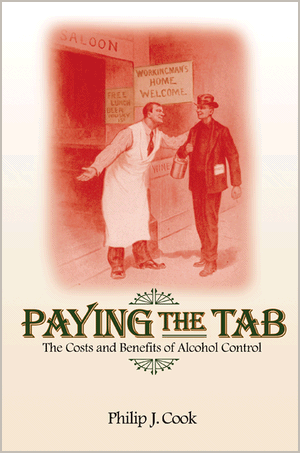
These statistics are from Paying the Tab: The Costs and Benefits of Alcohol Control by Philip Cook, a professor of Public Policy at Duke. And, I have not read the book yet.

Here are some more fascinating bits from the book which used data from a national survey that took place between 2001 and 2005: 
  • 30% of Americans don't drink at all. 
  • 30% of Americans drink at least one drink a day 
  • 20% drink at least two a day. (BTW, low-risk or moderate drinking falls somewhere between the two.) 
And according to the CDC excessive drinking costs us $223.5 billion in 2006, or about $1.90
per drink.


Definitely more to come on this fascinating topic...


Monday, September 22, 2014

All About Alcohol

Contrary to what we are led to believe, alcohol is the worst when it comes to harmful consequences. Globally it kills 2.5 million people and nationally 75,000 people die prematurely because of alcoholism and alcohol-related illnesses. It is the third leading killer globally.

An infographic from the team at Addiction Blog
Alcohol and the modern world (INFOGRAPHIC)

Here are some sobering facts about alcohol you may not have considered:

What is heavy drinking or risky drinking?
For men 14 or more units of alcohol per week.
For women, the number drops to 7.

What is a unit of alcohol?
.6 fluid ounce or 12 grams of pure alcohol, that is a 12 oz. bottle of beer, a shot of booze or a glass of wine (1/5th of a bottle).

Prolonged alcohol abuse or heavy drinking is linked to serious health risks:
  • alcoholic cardiomyopathy 
  • alcoholic liver disease 
  • decrease in bone density 
  • decrease in bone mass (leading to osteoporosis) 
  • heart arrythmias 
  • increased blood pressure 
  • increased risk of bone fracture 
  • loss of immune response 
  • stroke
But, just being drunk can be bad in the short term.
Lest we forget: alcohol costs money, it has calories, and it speeds up the ageing process.

Sunday, March 16, 2014

Coming Out from the Closet of Anonymity: New Recovery Advocacy Movement

I have written before about many of my clients' disfavor towards AA/NA approach to recovery. Complaints range from discomfort about its "religious" or "spiritual" take, emphasis on handing your life to "higher power": the necessity of admitting of "powerlessness": the depressive atmosphere of the meetings "AA/NA meetings are for older addicts who've run out of options.

I have addressed some of these criticisms and offered alternative communities where people can come together to provide mutual support and commiserate about their personal daily struggles.

New Recovery Advocacy Movement is gaining momentum by challenging the anonymity of recovery and declaring that it contributes to stigmatization of addiction and recovery. I very much agree about the problem of stigmatization (societal/personal). If the addict is alone with it it only contributes to the cycle of shame, guilt and isolation.

People behind movement have produced a documentary "Anonymous People."


This is the trailer, to view the full documentary you need to purchase it on Vimeo on Demand.
And here is the link to the longer piece from the Fix.

Friday, March 7, 2014

An Affair

An Affair is a piece of video work I found online, and I felt it deserved to be viewed by my readers. To me it's a poem set to moving images. Whatever it is called, I happened to really like it.

Here is a still:


It is artful, cool and fashion-y, but it also distills the pain, hopelessness and the ambivalence of someone trapped by their alcohol abuse.

For professionals working in fashion, arts, and even advertising, how do you balance the romanticism of urbanity, nightlife, alcohol, creativity and fashion with the sometimes brutal and painful reality of alcohol abuse?

I think that the creator of An Affair knows she has an issue with alcohol. She uses images and video segments from alcohol ads designed to make it glamourous. But... reality is far from it.

Enjoy this very personal work.

For some reason I can't directly link it on the page.

Soon, my site will be relocating to a more sophisticated platform...

Friday, August 30, 2013

Why AA Isn't Hip

Some of my clients are young problem drinkers whose alcohol abuse is severe enough to warrant their own concern. They come to me and other psychotherapists with the hope that they can gain control over their drinking habit which seems to be winning. Addicts they are not, they say, it’s just a matter of learning why they drink so much and to reassess their priorities and values. The objective is to no longer feel as if they are controlled by alcohol. Most are above average in intelligence with a promising future in one of the creative professions. Before seeking therapy, they have tried to stop drinking on their own and/or have gone to Alcoholics Anonymous for support, some repeatedly. Most of these clients stop going to AA for several reasons.Many complain that the atmosphere is depressing and off-putting. They feel they have little or no common with the majority of other AA members, besides alcohol. To them the typical AA goer is a wizened old timer who appears to have no other options other than to stop drinking entirely and attend AA meetings round the clock. Unlike them, my clients feel they still have options, and they feel they can re-learn to drink moderately, after a period of abstinence. 

I would like to address that sentiment with the following:
It's true that many people in AA are older and even just plain old. AA was originally intended for serious alcoholics who had bottomed out over and over again, meaning nothing else helped them to stop drinking. AA worked because it was a refuge, a place of last resort. It accepted them for who they are, and they found community. 

AA is still around because it does help serious alcoholics recover from active alcoholism and maintain sobriety through community. One reason why you see more older people is that older addicts are more likely to abstain for reasons that are connected to poor health resulting from years of sustained abuse. They may die if they continue to drink, and so they NEED the AA community to not drink again. Also, dealing with or avoiding consequences of addiction is exhausting, and older addicts are emotionally and mentally TIRED from running.

Having said that, it does not mean there is no place for younger people in AA. Which reminds me, there is a great independent feature that deals with this: it's called Smashed.

The role of AA for problem drinkers will be continued...

Wednesday, August 7, 2013

Who Are These Alcoholics?

Google “alcoholic pictures” and you will find that an alcoholic tends to be an unhappy adult white male who sits in the dark with his head in his hands. He is alone and depressed with only a bottle for company.


An alcoholic, defined clinically, is someone physically dependent on (addicted to) alcohol and unable to control how much they drink; alcoholic also has cravings and increased tolerance, and goes through withdrawal symptoms when alcohol leaves their system. Comparatively, a problem drinker, or an alcohol abuser, is someone psychologically dependent on alcohol but without the physical dependence (although a hang over is a collection of moderate withdrawal symptoms). For the problem drinker, the issue isn’t alcohol (because they can go without) but the reasons why they drink and what happens after they drink.

National Institute of Health and National Institute of Alcohol and Alcohol Abuse classified U.S. alcoholics into five subtypes. These results are from a 2007 national survey, and it is estimated 14 million Americans qualify as alcoholics.

Young Adult subtype: largest group in the U.S. with 31.5 percent of alcoholics. Low rate of mental illness, drug abuse and history alcoholism in their families. Least likely to seek out help.

Young Antisocial subtype: In their mind-twenties, 21 percent of U.S. alcoholics. Early onset of alcohol use and problems related to alcohol abuse. More than half from families with alcoholics. About half are diagnosed with Antisocial Personality Disorder. Many suffer from the trinity of mental illness (depression, bipolar disorder and anxiety problems). More than 75 percent smoke cigarettes and marijuana, and many have problems with cocaine and opiates. More than a third seek help.

Functional subtype: 19.5 percent of alcoholics. They are mostly middle-aged, well-educated, with stable jobs and families. Third have alcoholism in their family histories, a quarter had major depression at some point in their lives, and nearly half were smokers of tobacco.

Intermediate Familial subtype: 19 percent of American alcoholics, they are middle-aged and half withs familial history of alcoholism. Most smoked, half of them had clinical depression, and 20% have had bipolar disorder. Nearly 20% had problems with cocaine and marijuana. In this group only a quarter get treated.

Chronic subtype: 9 percent of U.S. alcoholics. Middle-aged; began drinking heavily at an early age. High rates of Antisocial Personality Disorder and criminality. Highest rate of mental illness (depression, bipolar disorder, anxiety disorder). High rates of smoking, marijuana, cocaine, and opioid dependence. 2/3 of the group get help (many of them to mandated to treatment making them the most prevalent type found in treatment.


Information, which I summarized here, comes from:

http://www.news-medical.net/news/2007/06/29/27074.aspx?page=2

http://www.alcoholic.org/research/alcoholism-statistics-and-information/


Are you an alcoholic? Find out here. 

In my practice I work to help problem drinkers with their emotional health, in addition to learning how to become a more mindful, moderate drinker.