Showing posts with label Binge Drinking. Show all posts

Wednesday, October 28, 2015

Drinking in America

http://cdn.muslimvillage.com/wp-content/uploads/2010/11/Alcohol-effects-on-society-are-greatly-underestimated.jpg
When a client comes to me because they are drinking too much, the first thing we do is we evaluate how much and how often they drink. Part of this exploration is to educate the client on health effects of alcohol and to understand the difference between healthy drinking and high-risk or problem drinking. And after the initial screening/evaluation, we then go on to look at other parts of their lives, to see what is contributing to excessive drinking and what the consequences are. This isn't an easy process, but a necessary one.

Often, clients are shocked when they learn that their drinking habit falls into the "problem or high-risk drinking" and, that they often binge drink. What may seem like a typical night out turns out to be a binge drinking session! (For women, binge drinking is drinking 5 or more units of alcohol in one session, and for men it's 7 or more.) For most people, I think, binge drinking is associated with college drinking. But this is not so.

Unfortunately, most Americans don't know what problem drinking looks like and dismiss their own heavy drinking until something bad happens. The fact is chronic heavy drinking shortens life and lowers the quality of life.

Here are some facts culled from recent findings about drinking in America.


The bottom line is that alcohol causes far greater harm than drugs. By CDC's estimation, between 2006-2010, 88,000 people died annually from complications from alcohol, while 38,329 died from drug overdoses in 2010.

Individually, persistent or chronic problem drinking is associated with depression and anxiety, decline in social and professional functioning (missing work or school, decreased productivity, social isolation, frequent arguing and fighting). Nationally this becomes a $249 billion problem each year in lost productivity and costs to cover treatment and crimes resulting from alcohol. Ultimately we all have to pay.

Friday, January 16, 2015

Dangers of Binge Drinking

Have you drunk more than 8 drinks in a single occasion this month? If you answer is yes you are not alone. On average 38 million American adults binge 8 or more drinks at a rate of 4 times a month.

I've written about binge drinking and its dangers before. One of the biggest misconception about binge drinking is that it's a problem primarily for young people — minors, college students and young professionals. What may surprise you is that the group of people who are at most risk from dangers of binge drinking (defined as drinking 5 or more drinks in one occasion) are middle aged adults.

According to the latest report from the CDC, 6 people on average die from alcohol poisoning each day. Surprisingly, 75% of them are adults between 35 to 64 years old. And majority of them (75%) are men.

Clients I see will NOT die from alcohol poisoning. The problem as I see it is that frequent binge drinking or heavy drinking normalizes drinking until it becomes habitual. It becomes the norm. Without so much awareness habitual drinking becomes the way to deal with unwanted feelings and positive feelings. Prolonged alcohol abuse weakens all the systems in the body and contribute to unnecessary health conditions, lower our quality of life and contribute to early death.

It's difficult to believe but alcohol-related deaths outnumber all drug overdose deaths each year.

In our culture we celebrate, socialize and cope with stress with alcohol. Inherently this isn't a bad thing. As long as we have inhabited this planet, we have invented concoctions to help us escape reality.

What is "bad" is when alcohol use or overuse becomes the "go to" to deal with stress, anxiety, loneliness and boredom.

If you find yourself drinking habitually ask yourself these questions.

• Am I drinking too much? (Everyone has that inner voice of reason, which is often more ignorable under the influence)
• Do my friends or social circle drink too much and act up in ways that raise red flags (DUI's fights, arrests, questionable sexual behavior?
• Do I wake up middle of the night and find myself unable to fall back asleep?
• Am I hungover in the morning and have a hard time getting going?
• Am I missing school or work because of my drinking?
• Have others (friends, family, partner, husband or wife) nagged me about my drinking?

Monday, January 12, 2015

Binge Drinking

Dictionary definition of binge:
a : a drunken revel
b : an unrestrained and often excessive indulgence
c : an act of excessive or compulsive consumption (as of food)
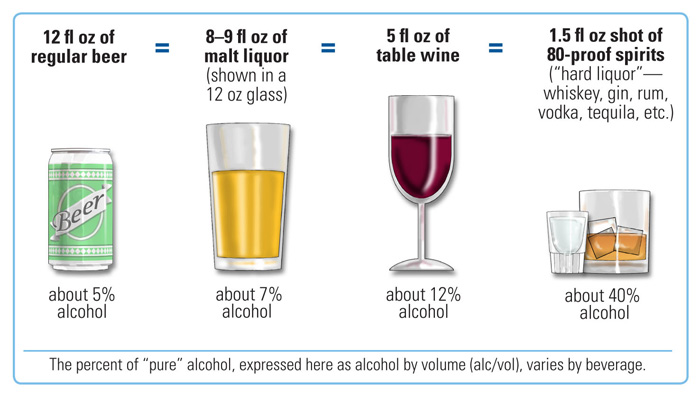
Binge drinking is defined as drinking five or more drinks in one sitting or session. If you want to get technical it's five for males and four for women. Women, due to size and biology just can't handle as much alcohol. Excessive or heavy drinking cutoff is more than 15 drinks per week for men and 8 for women. Just to get really nerdy, a drink is equivalent to a 12 ounce bottle or can of beer (this means a pint is a drink and a half), a shot of liquor and 5 ounces of wine (five units in a bottle).

Why is binging on alcohol so bad for you?
• You will feel bad the next day. Hello hangover!
• Increased likelihood of injury from falls, trips, bumping into things
• Under the influence (drunk) you are more likely to be disinhibited: doing things you normally wouldn't, like having unprotected sex, deciding to drive home, spending money excessively, etc.
• Alcohol poisoning which can permanently damage your brain, liver and other organs
• Getting into fights with friends, strangers, or your significant other
• Getting arrested, going to jail, etc.
• It may become habitual, which means you are at risk of becoming alcohol dependent and early death

According to the CDC, one in six adults binge drink about 8 drinks 4 times a month! 


Friday, September 26, 2014

Economics of Drinking

Pareto Law is a little known principle applicable to multiple disciplines. It is better known as the 80-20 rule: 80% of the effects comes from 20% of causes, or 20% of workers in an organization perform 80% of the work. 

What does this have to do with alcohol consumption? Everything, of course. 20% of Americans consume 80% of alcohol sold in the U.S. 

Check out this graphic.

Shockingly, 10% of Americans (24 million people over the age of 18) drink over 50% of all alcohol consumed in America. That averages out to 10 drinks per day or nearly 74 drinks a week (2 bottles of wine a day, or 18 bottles of wine or three 24-cases of beer per week).

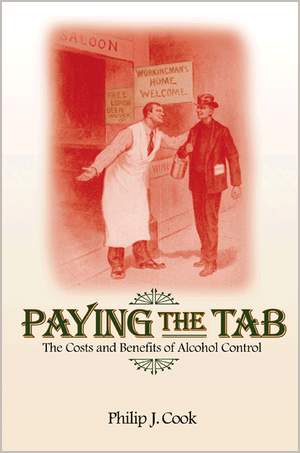
These statistics are from Paying the Tab: The Costs and Benefits of Alcohol Control by Philip Cook, a professor of Public Policy at Duke. And, I have not read the book yet.

Here are some more fascinating bits from the book which used data from a national survey that took place between 2001 and 2005: 
  • 30% of Americans don't drink at all. 
  • 30% of Americans drink at least one drink a day 
  • 20% drink at least two a day. (BTW, low-risk or moderate drinking falls somewhere between the two.) 
And according to the CDC excessive drinking costs us $223.5 billion in 2006, or about $1.90
per drink.


Definitely more to come on this fascinating topic...


Monday, September 22, 2014

All About Alcohol

Contrary to what we are led to believe, alcohol is the worst when it comes to harmful consequences. Globally it kills 2.5 million people and nationally 75,000 people die prematurely because of alcoholism and alcohol-related illnesses. It is the third leading killer globally.

An infographic from the team at Addiction Blog
Alcohol and the modern world (INFOGRAPHIC)

Here are some sobering facts about alcohol you may not have considered:

What is heavy drinking or risky drinking?
For men 14 or more units of alcohol per week.
For women, the number drops to 7.

What is a unit of alcohol?
.6 fluid ounce or 12 grams of pure alcohol, that is a 12 oz. bottle of beer, a shot of booze or a glass of wine (1/5th of a bottle).

Prolonged alcohol abuse or heavy drinking is linked to serious health risks:
  • alcoholic cardiomyopathy 
  • alcoholic liver disease 
  • decrease in bone density 
  • decrease in bone mass (leading to osteoporosis) 
  • heart arrythmias 
  • increased blood pressure 
  • increased risk of bone fracture 
  • loss of immune response 
  • stroke
But, just being drunk can be bad in the short term.
Lest we forget: alcohol costs money, it has calories, and it speeds up the ageing process.

Tuesday, April 1, 2014

The Importance of Addiction Counseling in Staying Sober

flickr commons

One of my favorite bloggers writing on the subject of sobriety, the Drunky Drunk Girl, recently posted a piece about why counseling should be part of living sober. She does not downplay the importance of AA and other types of mutual support groups to maintaining sobriety.

But, she says, professionals are needed to help "unravel the core issues" hidden under the addiction.

I've been doing this work for a few years, and I glimpsed some of these core issues. I mean glimpses because even the those in therapy are not completely invested in the process. It could take years of work and courage to digging, and for many this is too daunting.

Whether a client has had the most horrific childhood, suffered abuse and neglect, witnessed addiction and violence, and subjected to immeasurable harms caused by poverty; or the client comes from old money and had access to all the educational and vocational opportunities afforded by money, the underlying issues are very much similar — unresolved, unprocessed emotional pain originating in childhood. It can be parental neglect, enmeshment, a traumatic event, or even a habit (modeling) — if your parents drank fine wines with every meal, it wouldn't seem abnormal that you consume over 5 or 6 drinks during an evening out, which becomes the norm.

My job is to ask question, then listen, ask more questions and listen some more. And what comes to the surface is magical thinking, habitual (mindless) behavior, projection, distorted negative self-image, lack of a support network, anxiety and depression, etc. And they all intersect at one point or another.

It's possible to work through all this. However, you have to be willing to work at it and learn to be okay with the discomfort. There is just no other way.

https://drunkydrunkgirl.wordpress.com/2014/03/30/the-importance-of-professional-counseling/

Friday, January 31, 2014

Binge Drinking Is Killing Russians

http://usa-moscow.blogspot.com/
If you need proof that alcoholism is a killer, you need to look no further than what was reported today on the BBC.

According to a national study cited in the article, 25% of Russian men die before age 55 from drinking too much. I quickly did the math, and it means nearly 180,000 men. Total population of Russia is 142 million.

The causes of death were liver disease and alcohol poisoning. And drunken fights and accidents were also mentioned.

Here is the link to the article with disturbing details of what is basically a national tragedy.

http://www.bbc.co.uk/news/health-25961063