Showing posts with label Addiction. Show all posts

Monday, May 18, 2015

How We Learn to Self-Medicate

Flickr Commons
It is said that in any AA or NA meeting 60% of its group members will have experienced some form of abuse (physical, emotional or sexual) as a child. Childhood abuse is a good indicator of later substance abuse and addiction. 

Recently I posted about ACE (Adverse Childhood Experiences) Study which showed that early adverse experiences, or traumas, predict adult physical and mental health problems that ultimately lead to early death. Adult substance abuse is one such consequence, in addition to smoking and obesity.

In this context, I've been thinking a lot of about validation. To validate simply means recognizing another person's experience of an emotion and their reaction.

If a friend is crying because his dog recently died, I would validate by saying something like "I see that you are really sad" or "You are really missing Buster." In my wanting to help, I might instinctively want to problem solve or advise him so he feels less hurt. I will get there, but first and foremost I acknowledge that his sadness is real and valid.

Imagine a little girl falls and scrapes her knee, and she cries. Her mother or caretaker hopefully will say something like "Oh, no, you fell. Come and let me look at it" or "Let me see. I think it's going to be okay." Both statements indirectly validate that an accident has happened and that the little girl's reaction is valid. But, another parent might simply order the child to stop crying, or say something like "I told you not to run" or "This is what happens when you misbehave by running." 

In a dysfunctional or abusive family, a child's feelings and reactions are invalidated, as the latter examples illustrate. It doesn't seem so bad when looking at just one example, but when it is long-established pattern, parental invalidation teaches the child that her feelings, especially negative ones, can't and shouldn't be felt or expressed. 

The same girl might grow to ignore, disregard, deny or avoid her feelings, especially uncomfortable ones like sadness, anger, shame, guilt, boredom, loneliness, even though they are part of every person's experience.

Enter alcohol and drugs, which in the short-term help her avoid unpleasant feelings. Repeat this way of coping and a dependence and addiction develops. And a cycle of self-medication begins: Immediate relief from unpleasant feelings followed by intensification of those feelings, and so on...


Monday, May 4, 2015

Child Adverse Experices (ACE) and Adult Health

Federal law defines child abuse as the following:
  • "Any recent act or failure to act on the part of a parent or caretaker which results in death, serious physical or emotional harm, sexual abuse or exploitation"; or
  • "An act or failure to act which presents an imminent risk of serious harm."
Number of reported cases of child abuse is about 3 million annually. Every ten seconds another case of child abuse is reported to child protective services. 

I can't help wonder the actual number of children affected by child abuse and neglect. In my private practice and my work at a community mental health clinic, vast majority of clients experienced some form of abuse and neglect as children, but most of these cases did not get reported.

So, why do my clients come to therapy? Main complaints are: depression, anxiety, problems with drug and alcohol, addiction to food or sex, relational problems, sleep issues, low self confidence, general dissatisfaction in life. 

The relationship between childhood trauma and its effect on adult physical and mental health has been measured and documented in a study with over 17,000 people: ACE Study (Adverse Child Experiences). You can measure your score here

I will definitely revisit this subject in future posts.

Monday, January 12, 2015

Binge Drinking

Dictionary definition of binge:
a : a drunken revel
b : an unrestrained and often excessive indulgence
c : an act of excessive or compulsive consumption (as of food)
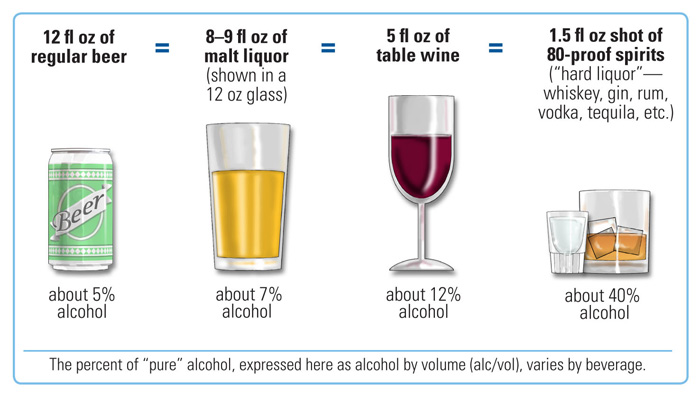
Binge drinking is defined as drinking five or more drinks in one sitting or session. If you want to get technical it's five for males and four for women. Women, due to size and biology just can't handle as much alcohol. Excessive or heavy drinking cutoff is more than 15 drinks per week for men and 8 for women. Just to get really nerdy, a drink is equivalent to a 12 ounce bottle or can of beer (this means a pint is a drink and a half), a shot of liquor and 5 ounces of wine (five units in a bottle).

Why is binging on alcohol so bad for you?
• You will feel bad the next day. Hello hangover!
• Increased likelihood of injury from falls, trips, bumping into things
• Under the influence (drunk) you are more likely to be disinhibited: doing things you normally wouldn't, like having unprotected sex, deciding to drive home, spending money excessively, etc.
• Alcohol poisoning which can permanently damage your brain, liver and other organs
• Getting into fights with friends, strangers, or your significant other
• Getting arrested, going to jail, etc.
• It may become habitual, which means you are at risk of becoming alcohol dependent and early death

According to the CDC, one in six adults binge drink about 8 drinks 4 times a month! 


Monday, September 29, 2014

Newest Eating Disorder: Orthorexia

http://www.choosingraw.com/neda-week-2014-considering-orthorexia/
Do you or do you know someone who adheres to a self-imposed dietary restriction that make going out for a simple meal a major headache? Do they sometimes go to the extreme of not eating because the food doesn't pass the "clean" test? Does a simple trip to the supermarket turn into a time consuming and stressful event during which every label must be carefully studied?

We all know vegetarians, rawfood enthusiasts, glutenphobics, pescartarians, freegans or just picky eaters. When does health consciousness become pathological? When does it become an eating disorder?

Eating disorders is primarily a problem of the West though it might be more accurate to say it's a problem in wealthier countries. In no way do I want to minimize the seriousness of eating disorders, a serious medical and mental health issue. But the fact that one in nine people in the world do not consume enough food to sustain a healthy life makes this disease especially poignant. Having an abundance of choices sometimes can be problematic.

Eating disorders (anorexia nervosa and bulimia) can cause amenorrhea, damage to the teeth, and in extreme cases it can even cause death. 

So what exactly is orthorexia? Ortho (straight, rectangular, upright, as in orthodontics and orthopedics) + orexia (desire, appetite). Anorexia = loss of appetite or lack of desire for food. Orthorexia: rigid appetite.

Orthorexia has not been recognized by the DSM, so it is not an official diagnosis, yet. Professionals in the field define orthorexia pathological desire to eat healthily, so much that it interferes with a "normal" life and jeopardizes physical health.
Experts say orthorexia becomes life-threatening when people's food restrictions make it impossible for them to take in enough calories and nutrients to maintain good health. Bell recently treated a 14-year-old girl who ate only raw fruits and vegetables. She dropped to 80 pounds and had to be hospitalized for an irregular heartbeat.
Orthorexia is one example of a healthy enthusiasm that becomes an addictive behavior creating harm and decreasing one's quality of life.

Monday, August 4, 2014

Russell Brand on Spiritual Practice


I don't know about you but Russell Brand is difficult to ignore. He has certainly made most intimate aspects of his life public: short lived marriage to a pop star; addiction to drugs and alcohol followed by recovery. He has made a name for himself as a passionate advocate of yoga and meditation. I respect him for making statements on subjects that make people and corporations very uncomfortable. But let's not forget he is a comedian and it's their job to make us feel hot under the collar, but he does a particularly great job at it.

I am featuring the short video above, actually a compilation of clips, which showcase his view on spirituality, addiction, culture, etc... And I have to say I like what he says and how he says it. The intensity of the delivery reveals the zeal with which he once consumed alcohol, drugs and sex. It is to our benefit that he has found another outlet to sublimate or redirect his energy. And so is he. In fact, as any addict in recovery will tell you, he probably wouldn't be alive to tell it how it really is.

One more thing, addiction takes time, energy, money and effort. Which begs the question, what are you going to do instead of abusing alcohol and drugs? How are you going to fill the time which was once devoted to getting high and drunk? For many, as is the case for Mr. Brand, a spiritual practice fills that void.


Sunday, May 4, 2014

Peaches Update: Death from Heroin OD

This is a follow up post to an earlier post on the tragic death of Peaches Geldof at age 25 with her young child next to her. I had played celebrity death sleuth but was incorrect in my assessment.

Legacy of addiction gets handed down like family estates and jewelry. Her mother overdosed at age 41 with a child at her side, and our Peaches recreates the scene 14 years later, except she was only 25.

Do we all become our parents? I think not.
Are we helpless to go on repeating the past, whether it is an addiction or a pattern of thinking and behaving?

This is why therapy needs to be part of every recovery process. Addiction isn't just the physical and psychological dependence. There exists a core conflict, our defining wound which originates in childhood. The resulting pain, whether psychological or spiritual or both, is what we attempt to dull with our substance(s) of choice.

Through therapy and/or spiritual reflection, we can become more aware, more in tune with our subconscious, so that we are less likely to act out, or behave unconsciously, and repeat what we know or become the parents whom we feel let us down.

http://www.thefix.com/content/peaches-geldof-reportedly-died-heroin-overdose

Sunday, April 13, 2014

Peaches Geldof: Eating Disorders and Body Dysmorphic Disorder

Peaches Honeyblossom Geldof March 13, 1989-April 7, 2014
Peaches Geldof died the other day. Autopsy results are still pending, but given her family history, many, including myself, are guessing that it's related to drugs and/or eating disorder. She was just 25. Horrifyingly, next to her body was her 11-month old son. When PG's mother died, her half sister, a baby at the time, was also found next to their mother who had overdosed from heroin.

PG had gone off radar, at least for me, for a few years, during which she seemed to have grown up —she had gotten married and became a young mother two young boys. Before this she was primarily known for being an English party girl famous for her druggy antics and her father.

I couldn't help knowing who she was just as I know Paris, Lindsay and Brittney. I've given up being resentful about celebrity culture and accepted that this is the pop culture we deserve; we celebrate the famous for just being famous.

In PG's case she was the daughter of Sir. Geldof. For anyone who came of age in the 80's, his name is difficult not to remember. Her mother, Paula Yates, died from a heroin overdose three years after the "suicide" of Michael Hutchence, the INXS singer, another difficult name to ignore from the same era. And as mentioned earlier, Yates' body was found in bed with her youngest daughter.

I am not interested in focusing on celebrities, but these occasional tragedies provide access points to discuss finer points about the nature of addiction and different forms it can take. Her mother was also diagnosed with an eating disorder (anorexia, bulimia, or dependence on stimulants to lower appetite or misuse of laxatives?), so the issue of "heritability" of addiction can be discussed, not just addiction to alcohol and drugs, but behavioral addictions. And is there a positive correlation between early trauma and addiction later on? (My answer? Duh.) Here is an ominous last interview she gave to The Independent, an English newspaper.

In my work, mostly I deal with addictions to drugs and alcohol. But over the years, I've encountered a few clients with eating disorders and body dysmorphic disorder (BDD). Always, these food-related, self-image centered issues were just one part of a larger cluster of addictive behaviors to drugs, alcohol, sex and self-defeating relationships (both romantic and social), in addition to poor self-esteem and a history of early loss of a parent, divorce, parental neglect, emotional abuse, and sometimes sexual abuse. Working with these clients (I am not an expert in eating disorders, btw) it felt as if one's body was the easiest, most readily controllable target onto which to transfer unprocessed negative feelings and memories, all of which take time and lots difficult work. Rather than looking inward to dig at the source of pain, eating disorders and BDD forces the body, and ultimately the self, to take all the blame.

History of substance addiction in the Geldof clan is well known, and the experience of losing one's mother at a young age to addiction without the privacy that is afforded to ordinary people, would have made any young woman susceptible and fragile to becoming self-conscious.

Ultimately, I feel PG's addiction to drugs and alcohol was replaced with pathological obsession/addiction to her weight and appearance, and partly at fault is the celebrity industrial complex, whatever that is exactly.

My heart goes out to the two young children who've just lost their mother, as well as rest of Peaches' family and friends.

Tuesday, April 1, 2014

The Importance of Addiction Counseling in Staying Sober

flickr commons

One of my favorite bloggers writing on the subject of sobriety, the Drunky Drunk Girl, recently posted a piece about why counseling should be part of living sober. She does not downplay the importance of AA and other types of mutual support groups to maintaining sobriety.

But, she says, professionals are needed to help "unravel the core issues" hidden under the addiction.

I've been doing this work for a few years, and I glimpsed some of these core issues. I mean glimpses because even the those in therapy are not completely invested in the process. It could take years of work and courage to digging, and for many this is too daunting.

Whether a client has had the most horrific childhood, suffered abuse and neglect, witnessed addiction and violence, and subjected to immeasurable harms caused by poverty; or the client comes from old money and had access to all the educational and vocational opportunities afforded by money, the underlying issues are very much similar — unresolved, unprocessed emotional pain originating in childhood. It can be parental neglect, enmeshment, a traumatic event, or even a habit (modeling) — if your parents drank fine wines with every meal, it wouldn't seem abnormal that you consume over 5 or 6 drinks during an evening out, which becomes the norm.

My job is to ask question, then listen, ask more questions and listen some more. And what comes to the surface is magical thinking, habitual (mindless) behavior, projection, distorted negative self-image, lack of a support network, anxiety and depression, etc. And they all intersect at one point or another.

It's possible to work through all this. However, you have to be willing to work at it and learn to be okay with the discomfort. There is just no other way.

https://drunkydrunkgirl.wordpress.com/2014/03/30/the-importance-of-professional-counseling/

Tuesday, March 18, 2014

Sunday, March 9, 2014

Passion vs. addiction

“Passion creates; addiction consumes—first the self and then the others within its orbit.”

“Any passion can become an addiction; but then how to distinguish between the two? The central question is: who’s in charge, the individual or their behaviour? It’s possible to rule a passion, but an obsessive passion that a person is unable to rule is an addiction. And the addiction is the repeated behaviour that a person keeps engaging in, even though he knows it harms himself or others. How it looks externally is irrelevant. The key issue is a person’s internal relationship to the passion and its related behaviours”

Excerpt From: Gabor Maté, M.D. “In the Realm of Hungry Ghosts.” 


What are your passions? 


Self portrait by Vivian Maier, a photographer whose passion for her art verged on addiction. But then again she suffered numerous emotional traumas which made her vulnerable to mental illness - hence obsession/addiction to her art. Fascinating woman and fantastic work: http://en.wikipedia.org/wiki/Vivian_Maier


Thursday, February 6, 2014

Addiction Is a Chronically Relapsing Disease: Philip Seymour Hoffman Part 2

There isn't much I can add to the very sad story. As more details emerge, the more depressing it becomes.

Addiction kills. Relapse is a boogeyman who stalks his prey, always looking for a crack in the armor. PSH's long-term partner left him and took their three children with her. It's not clear if she left because he relapsed or the separation caused the relapse. It's easy to get drawn into this sensational story, but I will leave those details for others.

But I do like this piece from the Slate.com about relapses and why they are to be feared.

Monday, February 3, 2014

Philip Seymour Hoffman's Overdose


It's the latest story of a very successful artist dying from addiction. I didn't say celebrity because he didn't strike me as such. A celebrity is someone famous who is compelled by fame to continue his or her work. I once saw him in Othello that had been readapted by a living playwright and staged at NYU. I found it unbearably pretentious and long, but then again everyone hated it including all the critics. Still, even as an unsophisticated theater viewer I felt his amazing stage presence; it was clear he was an artist, a very serious artist. 

Studies have linked creativity to susceptibility to mental illness. And the connection between mental illness and addiction is undeniable“Mental illnesses can lead to drug abuse. Individuals with overt, mild, or even subclinical mental disorders may abuse drugs as a form of self-medication,” according to the National Institute on Drug Abuse — addiction is a mental illness. The problem is that drugs, especially opiates are extremely addictive (psychologically and physically) and the possibility of overdose increases as tolerance builds — the longer you use you need a bigger dose of the drug to for the same level of euphoria. 

What's more troubling is that when a recovering opiate addict relapses, they face a greater risk for overdose. It's because physical tolerance decreases during recovery, but the psychological craving for the drug persists. 

Sadly, the often-quoted AA/NA mantras "one day at a time" and "once an addict, always an addict" ring too true.

There are tons of interviews and articles about PSH talking about acting and his struggle with addiction. After attending NYU as an undergraduate, he went to rehab and was sober for 23 years. This past year he publicly admitted to relapsing on painkillers that led to sniffing heroin. He then went into a drug treatment program for ten days, which really means he detoxed from opiates for ten days. 

Why did PSH only spend ten days in "treatment"? If he did get treated in a proper rehab program (28 days or longer), would I be writing about him along with so many others?

Relapsing after 23 years of sobriety, he does "rehab" for ten days. And less than a year later he is found dead in a luxurious bathroom with a needle his arm, in his underwear, next to baggies of heroin. 

Of all the great movies he's been in, I remembered Before the Devil Knows You're Dead, a dark comedy (the internet says a thriller) about a very anxious man, his dysfunctional family and the desperate measures he takes to escape his life. PSH plays the man who plans to "rob" his parent's jewelry store with the help of his useless brother. Things go wrong, and his situation worsens. And behind all his trouble is his addiction to heroin. Near the end of the movie, we find him in a luxury apartment, no ordinary shooting gallery. He makes his purchase, shoots up and is left alone to nod off on very expensive furniture.

Friday, September 27, 2013

Sex addiction and recovery: Thanks for Sharing

Here is a link to a really thoughtful piece/film review by Robert Weiss MSW on Thanks for Sharinghttp://m.huffpost.com/us/entry/3982933
The movie was released a few months ago and it stars big name actors. I didn't think twice about it but reading the review made me want to see it.

I am interested in addiction to sex even though it's outside my training and professional expertise, because it can and does overlap with other addictions. The movie is also about recovery and the culture (hence its title) of 12 step programs (AA being the grand daddy), an essential part of addiction treatment and maintainence of sobriety.

Couple of points the wise Mr. Weiss wrote stood out for me, and I am going to paraphrase them: he said alcohol, food, sex, drugs and the like are used to fill the "primitive need to self medicate." Also, he said treatment and recovery from any type of addictions does not happen in isolation. Human connection is a necessary ingredient in healing.

More on these two points in future blog entries. 

Again, here is the link: http://m.huffpost.com/us/entry/3982933

Friday, August 30, 2013

Why AA Isn't Hip

Some of my clients are young problem drinkers whose alcohol abuse is severe enough to warrant their own concern. They come to me and other psychotherapists with the hope that they can gain control over their drinking habit which seems to be winning. Addicts they are not, they say, it’s just a matter of learning why they drink so much and to reassess their priorities and values. The objective is to no longer feel as if they are controlled by alcohol. Most are above average in intelligence with a promising future in one of the creative professions. Before seeking therapy, they have tried to stop drinking on their own and/or have gone to Alcoholics Anonymous for support, some repeatedly. Most of these clients stop going to AA for several reasons.Many complain that the atmosphere is depressing and off-putting. They feel they have little or no common with the majority of other AA members, besides alcohol. To them the typical AA goer is a wizened old timer who appears to have no other options other than to stop drinking entirely and attend AA meetings round the clock. Unlike them, my clients feel they still have options, and they feel they can re-learn to drink moderately, after a period of abstinence. 

I would like to address that sentiment with the following:
It's true that many people in AA are older and even just plain old. AA was originally intended for serious alcoholics who had bottomed out over and over again, meaning nothing else helped them to stop drinking. AA worked because it was a refuge, a place of last resort. It accepted them for who they are, and they found community. 

AA is still around because it does help serious alcoholics recover from active alcoholism and maintain sobriety through community. One reason why you see more older people is that older addicts are more likely to abstain for reasons that are connected to poor health resulting from years of sustained abuse. They may die if they continue to drink, and so they NEED the AA community to not drink again. Also, dealing with or avoiding consequences of addiction is exhausting, and older addicts are emotionally and mentally TIRED from running.

Having said that, it does not mean there is no place for younger people in AA. Which reminds me, there is a great independent feature that deals with this: it's called Smashed.

The role of AA for problem drinkers will be continued...