Monday, May 4, 2015

Child Adverse Experices (ACE) and Adult Health

Federal law defines child abuse as the following:
  • "Any recent act or failure to act on the part of a parent or caretaker which results in death, serious physical or emotional harm, sexual abuse or exploitation"; or
  • "An act or failure to act which presents an imminent risk of serious harm."
Number of reported cases of child abuse is about 3 million annually. Every ten seconds another case of child abuse is reported to child protective services. 

I can't help wonder the actual number of children affected by child abuse and neglect. In my private practice and my work at a community mental health clinic, vast majority of clients experienced some form of abuse and neglect as children, but most of these cases did not get reported.

So, why do my clients come to therapy? Main complaints are: depression, anxiety, problems with drug and alcohol, addiction to food or sex, relational problems, sleep issues, low self confidence, general dissatisfaction in life. 

The relationship between childhood trauma and its effect on adult physical and mental health has been measured and documented in a study with over 17,000 people: ACE Study (Adverse Child Experiences). You can measure your score here

I will definitely revisit this subject in future posts.

Friday, January 16, 2015

Dangers of Binge Drinking

Have you drunk more than 8 drinks in a single occasion this month? If you answer is yes you are not alone. On average 38 million American adults binge 8 or more drinks at a rate of 4 times a month.

I've written about binge drinking and its dangers before. One of the biggest misconception about binge drinking is that it's a problem primarily for young people — minors, college students and young professionals. What may surprise you is that the group of people who are at most risk from dangers of binge drinking (defined as drinking 5 or more drinks in one occasion) are middle aged adults.

According to the latest report from the CDC, 6 people on average die from alcohol poisoning each day. Surprisingly, 75% of them are adults between 35 to 64 years old. And majority of them (75%) are men.

Clients I see will NOT die from alcohol poisoning. The problem as I see it is that frequent binge drinking or heavy drinking normalizes drinking until it becomes habitual. It becomes the norm. Without so much awareness habitual drinking becomes the way to deal with unwanted feelings and positive feelings. Prolonged alcohol abuse weakens all the systems in the body and contribute to unnecessary health conditions, lower our quality of life and contribute to early death.

It's difficult to believe but alcohol-related deaths outnumber all drug overdose deaths each year.

In our culture we celebrate, socialize and cope with stress with alcohol. Inherently this isn't a bad thing. As long as we have inhabited this planet, we have invented concoctions to help us escape reality.

What is "bad" is when alcohol use or overuse becomes the "go to" to deal with stress, anxiety, loneliness and boredom.

If you find yourself drinking habitually ask yourself these questions.

• Am I drinking too much? (Everyone has that inner voice of reason, which is often more ignorable under the influence)
• Do my friends or social circle drink too much and act up in ways that raise red flags (DUI's fights, arrests, questionable sexual behavior?
• Do I wake up middle of the night and find myself unable to fall back asleep?
• Am I hungover in the morning and have a hard time getting going?
• Am I missing school or work because of my drinking?
• Have others (friends, family, partner, husband or wife) nagged me about my drinking?

Monday, January 12, 2015

Binge Drinking

Dictionary definition of binge:
a : a drunken revel
b : an unrestrained and often excessive indulgence
c : an act of excessive or compulsive consumption (as of food)
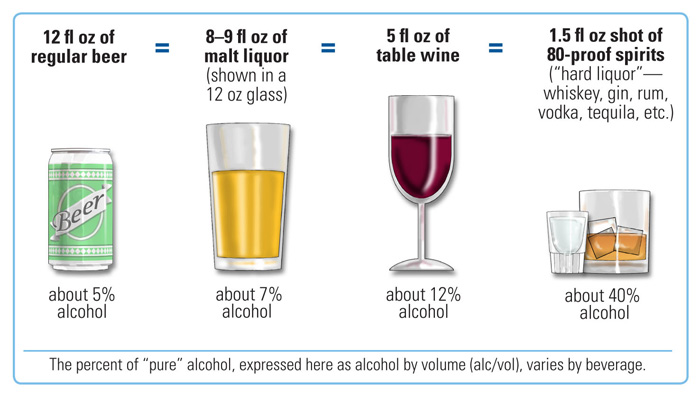
Binge drinking is defined as drinking five or more drinks in one sitting or session. If you want to get technical it's five for males and four for women. Women, due to size and biology just can't handle as much alcohol. Excessive or heavy drinking cutoff is more than 15 drinks per week for men and 8 for women. Just to get really nerdy, a drink is equivalent to a 12 ounce bottle or can of beer (this means a pint is a drink and a half), a shot of liquor and 5 ounces of wine (five units in a bottle).

Why is binging on alcohol so bad for you?
• You will feel bad the next day. Hello hangover!
• Increased likelihood of injury from falls, trips, bumping into things
• Under the influence (drunk) you are more likely to be disinhibited: doing things you normally wouldn't, like having unprotected sex, deciding to drive home, spending money excessively, etc.
• Alcohol poisoning which can permanently damage your brain, liver and other organs
• Getting into fights with friends, strangers, or your significant other
• Getting arrested, going to jail, etc.
• It may become habitual, which means you are at risk of becoming alcohol dependent and early death

According to the CDC, one in six adults binge drink about 8 drinks 4 times a month! 


Sunday, December 14, 2014

How to Beat the Holiday Blues

http://img2-2.timeinc.net/toh/i/g/10/holidays/xmas/12-diy-disasters/04-homeowner-mishaps.jpg

Thanksgiving is the first of the triple threat (Christmas and New Year's complete the trifecta) that can make you sing the holiday blues... If you are like me making "happy happy" during this time can actually be a real downer. If there are family conflicts (who doesn't?) the obligatory joy and gladness can seem like one big fat cruel joke. In addition, if you are struggling with relationships, work, money or going through a significant life-changing event (breakup, divorce, death of a loved one) you feel you want to skip the festivities. However, non-participation may not be an option. And for others the possibility of spending any of these holiday without family and friends can them into a dark and lonely place.

Here are some tips for avoiding emotional fallout this holiday season. 

1. Recognize physical symptoms of depression and anxiety. Emotional distress begins in the body. If you feel exhausted and tired look inward to see if it's psychological or physical. Anxiety can manifest as stomach upset, insomnia, irritability or jumpiness. Again, take an inventory. Identifying and understanding physical symptoms is the first step in addressing them. Whether the source is emotional or physical, you can do something about them.

2. Ask yourself what the symptoms mean. If they are physical, slow down, rest, change your diet etc... If they are psychological in origin ask yourself what are these feelings and what do they mean? Are you trying to suppress or ignore feelings of guilt, obligation, resentment and anger, or any other negative emotion?

3. Be kind to yourself and others. If you don't feel well and cranky maybe going to a holiday party isn't the best idea as it may make you feel worse. Sitting out a party or a gathering can be the kinder thing for yourself and for others; you are sparing negative energy from people you love and like. Listen to your inner voice even if it's saying something out of the ordinary.

4. Talk it out with your therapist, friends and family (not at the party or the dinner). Engage, reach out and share your feelings. If other people aren't available, talk to yourself by writing it out in a journal.

5. Go easy with food and drink. Alcohol will certainly amplify whatever you are feeling and overindulging will actually worsen symptoms of anxiety and depression and decrease the quality of sleep. As for food, gaining extra weight is much easier and more fun than losing it, so practice moderation.

6. Get your sleep and exercise. Enough said.

7. Be proactive. If you know you are going to be alone research and plan ahead activities. Do you have books, movies and activities to keep you occupied? Reach out to others who may be also be in the same boat.

8. Lower your expectations, or at least make realistic your expectations of the holiday season. Norman Rockwell's version of American holiday experience is aspirational at best. 

9. Create your own rituals even if it's just for this year. Maybe Santa Claus will no longer be welcomed in your home. Rather than receiving maybe Christmas is just about giving nonmaterial things. Go ahead and create your own activities based on YOUR values.

10. Be mindful. Holidays come around once a year and for some it is a season of fun and celebration. Acknowledge their right as your own. Also, be mindful that, thank god, they come around just once a year and this too shall pass. 

Friday, December 12, 2014

Iguala, Mexico and the Casual American Drug User

Wikipedia

Iguala is a city of about 100,000 people southwest of Mexico City, a city at the center of national and international attention after 43 students went missing. Students were from a rural Mexican teacher's college, and they are are presumed dead — murdered — their remains burned and buried.

In Mexico thousands have marched in protest to express their anger and outrage. Some protesters went far as even torching the national palace in Mexico City to bring attention to government officials who are ineffectual at best and at their worst who collude with the narco traffickers, who are certainly behind this massacre. Mexicans are fed up. After years of drug war and brutal murders of thousands, this case sparked a national outrage, and rightfully so.

Narco traffickers is the general term to assigned to large, powerful drug cartels who fight among themselves for territory and control of drugs flowing from South America and Mexico to the United States. Without our staggering demand for illegal drugs these gangs would not be in existence, or they would not be as powerful. Profits are so vast they can buy politicians and the police, locally and nationally to protect their interests and operate without impunity.

How and why does this relate to my work? Americans spend about 500 billion dollars annually on cocaine, heroin, marijuana and meth. It is a staggering amount of money and most of the product travels through Mexico. Cocaine is produced further south Colombia, Peru and Bolivia. Heroin poppies are cultivated in Mexico as is marijuana. Mexico by its location serves as the funnel for drugs entering the country. Obviously we have a great appetite for drugs in America. And I've always made it clear that I advocate for personal choice when it comes to drug use.

Unlike other consumer goods the street drug buyers do nots have choice when it comes to the source of the supply. It is strictly a supplier's game. Cocaine and heroin are not labeled with their countries of origin or provenance. There is no Community Supported Agriculture (CSA) for drugs, or ethical cocaine and heroin, unlike, say, diamonds or chocolates.

I think one of the reasons why marijuana is being legalized in the US at a quickened pace is to decrease the amount trafficked from Mexico.

Am I saying casual drug users are somehow implicated in this? Maybe.

What I am saying is we cannot take street drugs from the larger global context. The money we spend on it may be supporting crime and even terrorist organizations. If you are going to boycott Walmart, GMO foods and blood diamonds, shouldn't you do the same with your weekend supply of recreational drugs?